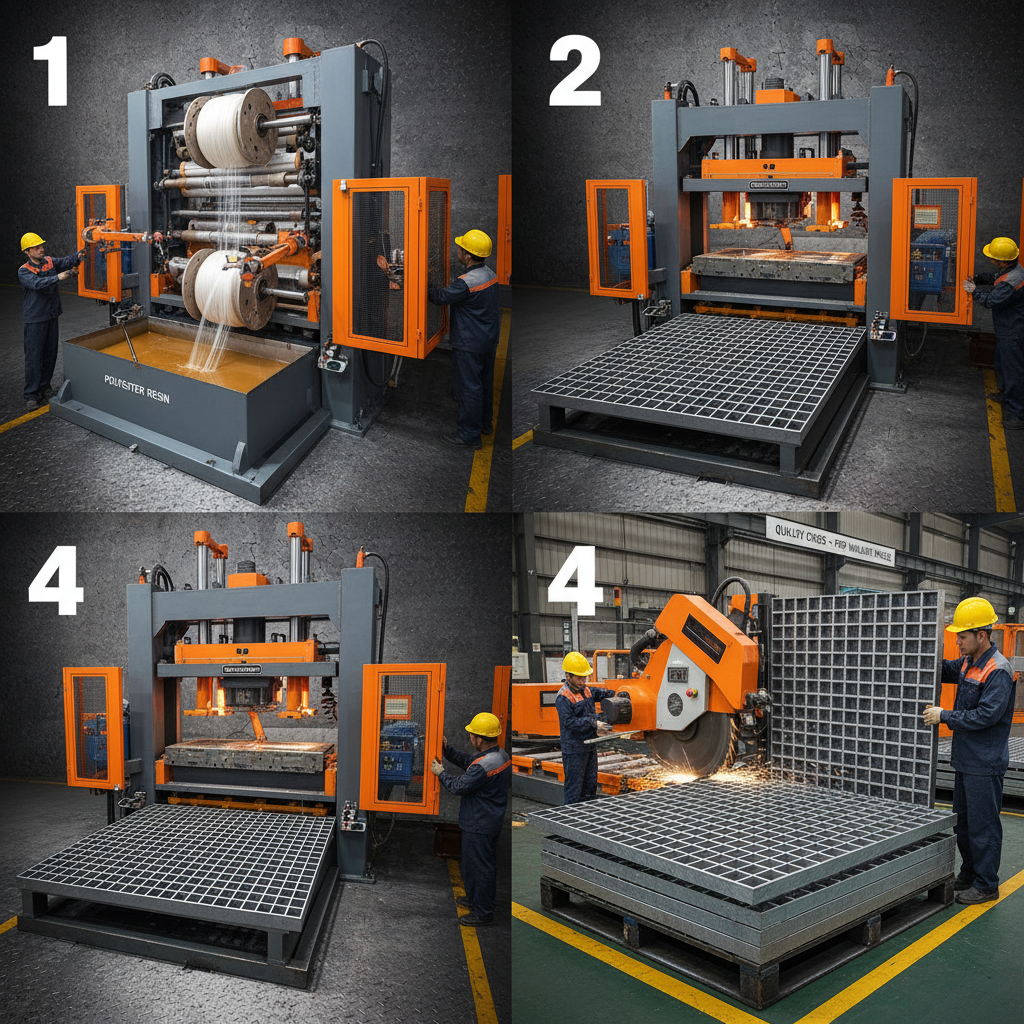
Identifying reliable frp pressure vessel manufacturers is critical for industries dealing with aggressive chemicals and high-pressure environments. In the sector of non-metallic mineral products and fiberglass reinforced plastics, these specialized vessels offer a vital alternative to traditional metals, providing essential corrosion resistance and structural integrity for hazardous fluid storage.
The primary challenge for procurement engineers is balancing mechanical strength with chemical compatibility while avoiding the high maintenance costs associated with metallic oxidation. Selecting a manufacturer that understands the nuances of composite layering and resin selection is the only way to ensure long-term operational safety and regulatory compliance.
This guide provides a technical and procurement framework to help you evaluate fiberglass vessel suppliers, understand the key performance indicators of FRP composites, and establish a selection process based on material science and industrial application requirements.

Material Fundamentals for FRP Vessels

Fiberglass Reinforced Plastic (FRP) vessels are engineered composites consisting of a polymer resin matrix reinforced with glass fibers. Unlike homogenous metals, FRP is an anisotropic material, meaning its strength can be tailored to the specific direction of the pressure loads. This allows manufacturers to optimize the wall thickness and fiber orientation to maximize efficiency.
The chemical resistance of the vessel is primarily determined by the liner resin—typically vinyl ester or epoxy—which protects the structural layers from the processed media. ZJ Composites focuses on this synergy of material science to ensure that the final product is not only strong but virtually immune to the corrosion that typically plagues stainless steel or carbon steel in acidic environments.
Critical Design and Manufacturing Specifications
When reviewing a manufacturer's capability, the fabrication method is the most important technical variable. Filament winding is the gold standard for pressure vessels, as it allows for precise control over the winding angle, ensuring that the vessel can withstand internal hoop stress and axial loads without deformation.
Key specifications that must be verified include the resin-to-glass ratio, the cure cycle temperature, and the void content. High-quality manufacturers implement strict inspection protocols to ensure that no air pockets are trapped within the laminate, as these voids can become initiation points for structural failure under high-pressure cycling.
Industrial Application Scenarios
FRP pressure vessels are indispensable in sectors where water treatment, chemical processing, and petrochemical storage overlap. Their primary value is realized in the storage of brine, sulfuric acid, and various caustic solutions where metal vessels would require expensive exotic alloys or frequent liner replacements.
Beyond storage, these vessels are used as filtration housings and reactor shells. ZJ Composites provides solutions that integrate these vessels with other composite components, such as FRP pultrusion profiles and gratings, to create a fully corrosion-resistant operational environment, reducing the total cost of ownership across the facility.
Performance Index: FRP vs. Traditional Metals
Comparing FRP to traditional metals requires looking beyond initial purchase price toward long-term operational stability. The following conceptual index illustrates the relative performance of FRP across five critical industrial dimensions compared to standardized metallic alternatives.
This relative evaluation demonstrates that while metals may hold a slight edge in absolute peak temperature resistance, FRP significantly outperforms in corrosion resistance, weight-to-strength ratio, and maintenance requirements, making it the logical choice for most chemical applications.
Supplier Evaluation and Quality Benchmarks
Evaluating frp pressure vessel manufacturers requires a dive into their technical support and inspection capabilities. A reputable supplier should provide detailed laminate schedules and resin data sheets. The presence of skilled labor and specialist teams for strict inspection is a hallmark of a reliable partner.
Furthermore, a manufacturer's ability to offer OEM and ODM customized services indicates a high level of engineering maturity. Whether the project requires a standard storage tank or a complex custom vessel with specific nozzle orientations, the supplier's experience in managing these customizations directly impacts the safety of the final installation.
Common Implementation Risks and Mitigations
The most common failure in FRP vessel installation is improper handling or mechanical impact during transit and setup. Unlike steel, composites can suffer from internal delamination from a sharp impact that may not be visible on the surface, potentially compromising the pressure rating.
To mitigate these risks, buyers should ensure that the manufacturer provides clear installation guidelines and, if necessary, on-site engineering support for commissioning. Regular ultrasonic testing (UT) or acoustic emission testing should be scheduled to monitor the structural health of the vessel throughout its lifecycle.
Decision Framework for Vessel Procurement
Selecting the right vessel involves a trade-off analysis between the chemical aggressiveness of the medium, the operating pressure, and the expected service life. This framework helps procurement teams categorize their requirements to choose the most suitable material and manufacturing approach.
| Requirement | Low Pressure / Mild Acid | High Pressure / Aggressive | Extreme Temperature |
|---|---|---|---|
| Resin Choice | Orthophthalic | Vinyl Ester / Epoxy | High-Temp Phenolic |
| Wall Design | Standard Laminate | Filament Wound | Heavy Reinforced |
| Maintenance | Low | Moderate (Inspections) | High (Monitoring) |
| Service Life | 15-20 Years | 20-30 Years | Variable |
| Primary Risk | UV Degradation | Delamination | Thermal Stress |
| Cost Driver | Material Volume | Precision Winding | Specialized Resins |
By aligning these technical dimensions with the actual operational environment, engineers can avoid over-specifying the vessel (which increases cost) or under-specifying (which increases risk), ensuring a balanced and sustainable investment.
Frequently Asked Questions
Verification should be done through a combination of the manufacturer's design calculations (based on ASTM or ASME standards) and a physical hydrostatic test, where the vessel is pressurized beyond its operating limit to ensure structural integrity.
FRP vessels can handle elevated temperatures, but the limit depends entirely on the glass transition temperature (Tg) of the resin used. For high-temperature applications, specialized resins like high-Tg vinyl esters or phenolics must be specified.
Depending on the chemical environment and maintenance, a well-manufactured FRP vessel typically lasts 20 to 30 years, significantly longer than carbon steel in corrosive environments where oxidation occurs rapidly.
No, they generally do not. The internal "liner" is integrated into the vessel structure during manufacturing, using a resin specifically chosen for the chemical compatibility of the stored media.
Manufacturers typically apply a UV-resistant gel coat or a specialized external paint to prevent the resin from degrading under sunlight, which ensures the structural exterior remains intact.
Filament winding provides superior strength and consistency by automating the placement of fibers at precise angles, resulting in higher pressure ratings and lower weight compared to manual hand lay-up methods.
Conclusion
Selecting the right frp pressure vessel manufacturers is a strategic decision that impacts the safety and longevity of industrial infrastructure. By focusing on material compatibility, manufacturing precision (specifically filament winding), and rigorous quality inspection, companies can transition from high-maintenance metallic systems to durable, corrosion-free composite solutions.
For organizations evaluating implementation options for their specific chemical or pressure requirements, detailed product specifications and technical consultation are available at www.zjcomposites.com to ensure an optimal match between material science and operational needs.