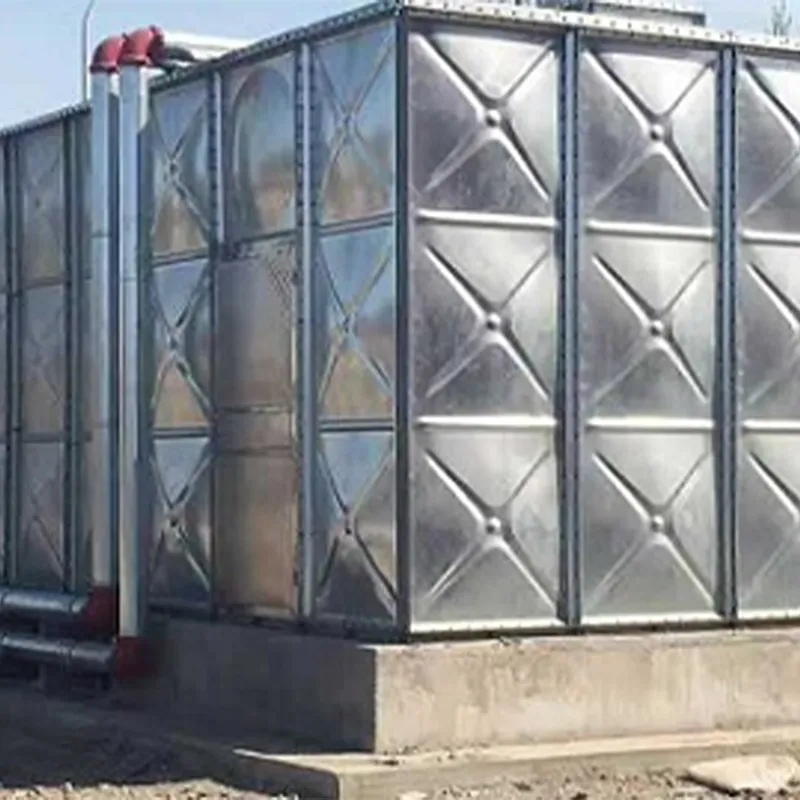
Industrial GRP Water Tank Price and Performance Guide
Selecting an industrial storage solution requires a critical balance between initial capital expenditure and long-term operational costs. For facilities dealing with corrosive chemicals or harsh environmental exposure, fiberglass reinforced plastic (FRP/GRP) has emerged as the primary alternative to traditional metals. While many procurement managers focus heavily on the grp water tank price, the true value lies in the material's innate ability to eliminate the cycle of sandblasting and painting required by steel.
ZJ Composites specializes in high-performance composite engineering, providing storage solutions that prioritize structural integrity and chemical resistance. By utilizing advanced pultrusion and laminating processes, these tanks offer a superior strength-to-weight ratio, ensuring that the total installed cost remains competitive while significantly reducing the life cycle expenditure. Whether for potable water, industrial effluent, or chemical processing, the transition to GRP is an investment in durability and safety.

The Engineering Advantage of GRP Over Conventional Metallic Storage Systems
Conventional metallic tanks often suffer from rapid degradation due to oxidation and chemical attack, necessitating frequent maintenance and eventual replacement. In contrast, GRP (Glass Reinforced Plastic) is engineered to be chemically inert. This makes it an ideal choice for industries where corrosion is a constant threat. The material consists of a high-strength glass fiber reinforcement embedded within a polymer resin matrix, creating a composite that is both rigid and flexible enough to withstand pressure loads.
One of the most significant advantages is the high strength-to-weight ratio. GRP components are often less than half the weight of their steel counterparts. This reduction in mass simplifies the logistics of transport and installation, removing the need for heavy lifting equipment and reducing the labor hours required for onsite assembly. Furthermore, the non-conductive nature of fiberglass provides an inherent safety layer in electrically sensitive environments, reducing the risk of galvanic corrosion and electrical hazards.
- Chemical Inertness: Resistance to acids, alkalis, and salts.
- Structural Stability: High unidirectional strength and stiffness.
- Thermal Insulation: Low thermal conductivity compared to metals.
- Environmental Resistance: Integrated UV inhibitors prevent weathering.

Critical Performance Metrics for Industrial Fluid Storage Applications
When evaluating a composite tank, engineers must look beyond the surface and analyze the laminate composition. The percentage of glass within the resin matrix directly correlates to the tank's durability and its ability to handle high-load capacities. For instance, ZJ Composites utilizes a recessed tie bar configuration in related grating products and similar precision engineering in vessel walls to ensure that wide support spans can be maintained without additional structural reinforcement.
Safety is another paramount consideration. Modern GRP tanks are designed to meet strict fire retardant standards, often achieving a flame spread rating of 25 or less in accordance with ASTM E-84. This makes them suitable for high-risk industrial zones where self-extinguishing properties are mandatory. Additionally, for outdoor installations, the application of a synthetic surfacing veil and UV inhibitors ensures that the structural integrity of the resin matrix is not compromised by prolonged sunlight exposure.
Maintenance requirements are virtually nonexistent compared to metal. The smooth internal surfaces of GRP tanks prevent the buildup of scales and contaminants, and the exterior can be easily cleaned with high-pressure washers. This eliminates the need for scraping or epoxy coatings, allowing facility managers to focus resources on production rather than infrastructure repair.
Application Scenarios and Selection Criteria for Composite Vessels
The versatility of GRP allows it to be deployed across a diverse range of industrial landscapes. In wastewater treatment plants, the resistance to hydrogen sulfide and other corrosive gases makes GRP the only viable long-term solution. Similarly, in the food and beverage industry, the non-leaching properties of high-grade resins ensure that stored liquids remain uncontaminated and compliant with health standards.
When selecting the appropriate tank configuration, buyers should consider the following factors:
- Fluid Chemistry: Ensure the resin type (e.g., Vinyl Ester or Polyester) matches the chemical compatibility of the stored medium.
- Load Requirements: Determine if the tank will be subject to vehicular loads (H20) or standard industrial pressures.
- Installation Space: Utilize the lightweight nature of GRP to install tanks in locations where floor loading is limited.
- Temperature Fluctuations: Evaluate the thermal expansion coefficients to ensure stability in extreme climates.
By matching the specific technical grade of the GRP to the operational environment, companies can avoid the common mistake of over-specifying materials, which helps in optimizing the overall project budget without sacrificing safety or longevity.
Comparison of Material Performance for Industrial Storage
| Feature | GRP / Fiberglass | Carbon Steel | Stainless Steel | Polyethylene |
|---|---|---|---|---|
| Corrosion Resistance | Excellent | Low | High | Very High |
| Strength-to-Weight | Very High | Medium | Medium | Low |
| Maintenance Needs | Minimal | Frequent | Moderate | Minimal |
| Installation Cost | Low | High | High | Low |
| Service Life | Long | Short/Medium | Long | Medium |
Procurement Strategies and Quality Assurance in Composite Manufacturing
Procuring industrial tanks requires a partner capable of providing both OEM and ODM services. ZJ Composites employs a dual-team approach: a technical team of specialists and skilled laborers for strict inspection, and a customer service team with overseas experience to manage the complexities of international logistics. This ensures that the product delivered matches the engineering specifications exactly, regardless of the destination.
Quality control in GRP manufacturing focuses on the curing process and the glass-to-resin ratio. Any void or air bubble in the laminate can become a point of failure under pressure. Therefore, the use of standardized management and perfect testing equipment is non-negotiable. Buyers should verify that the supplier provides a warranty and lifetime technical support, as these are indicators of the manufacturer's confidence in their production consistency.
From a commercial perspective, the total cost of ownership (TCO) is the most critical metric. While the initial grp water tank price may vary based on raw material rates and customization, the elimination of biennial painting and the reduction in downtime for repairs result in a significantly lower life cycle cost compared to metallic systems.
Future Trends in Composite Storage and Material Innovation
The industry is moving toward "Smart Composites," where sensors are embedded directly into the tank walls during the lamination process. These sensors can monitor structural stress, temperature changes, and leak detection in real-time, providing an unprecedented level of operational safety. ZJ Composites continues to innovate in this direction, seeking ways to make composites "better than metal" through premium material science.
Additionally, there is a growing trend toward modularity. Prefabricated GRP sections allow for faster deployment and easier scalability. As industrial needs grow, companies can expand their storage capacity by adding modular units rather than replacing entire systems. This flexibility, combined with the development of more sustainable, low-emission resins, ensures that GRP will remain the dominant choice for fluid storage in the coming decade.
For procurement managers, the recommendation is to prioritize suppliers who offer customized engineering solutions. A "one size fits all" approach often leads to inefficiency. By collaborating with specialists who understand the specific chemical and mechanical stresses of your application, you can ensure a system that is optimized for both performance and cost.
Frequently Asked Questions Regarding GRP Storage Solutions
Can GRP tanks be customized for specific chemical storage?
Yes, ZJ Composites provides comprehensive OEM and ODM services. We can adjust the resin type and laminate thickness to match the specific chemical compatibility and pressure requirements of your application.
How does the lifespan of a fiberglass tank compare to a steel tank?
GRP tanks typically offer a much longer service life in corrosive environments because they do not rust. While steel requires constant coating and maintenance, GRP's inherent corrosion resistance ensures durability over decades.
Is GRP safe for potable water storage?
Yes, when manufactured with the appropriate food-grade resins and surfacing veils, GRP is highly suitable for potable water, providing a hygienic environment that resists bacterial growth and corrosion.
What is the typical payment and delivery process?
Normally, we require a 30% deposit with the remaining 70% paid before shipping via T/T. Delivery times vary based on the product's complexity and quantity, but our expert production lines ensure efficient turnaround.
Do your products come with a warranty?
Most of our products include a 1-year free warranty along with lifetime technical service support to ensure your system operates at peak performance.
Can you provide on-site installation support?
Yes, we can send our engineers for installation and commissioning. Please note that the relevant travel and accommodation costs for the engineering team are to be covered by the client.
Technical References and Industry Standards
- ASTM International - Standards for Composite Materials
- ISO Standards for Industrial Storage Vessels
- CompositeWorld - Advanced Material Research
- EPA Guidelines for Chemical Storage and Containment
For detailed technical specifications or to request a custom quote based on your project requirements, please contact the ZJ Composites engineering team today. We are committed to providing the optimal solution for your industrial storage needs.
Related Technical Insights