Creating a safe outdoor living space often begins with a critical question: is a grill on deck safe? For homeowners and commercial property managers alike, the integration of high-heat cooking appliances onto wooden or composite structures presents a unique set of fire safety challenges and structural considerations. Understanding the intersection of heat dissipation and material resilience is the first step toward a secure leisure environment.
Globally, the trend toward "alfresco" living has increased the prevalence of deck-mounted kitchens. However, without the proper safeguards—such as heat shields or non-combustible flooring—the risk of structural ignition remains a significant concern for fire departments and insurance providers. The goal is to balance the convenience of outdoor dining with rigorous safety standards to prevent catastrophic accidents.
By implementing modern material science, such as using FRP grating or specialized fire-resistant mats, ensuring a grill on deck safe setup becomes an achievable goal. This guide explores the technical requirements, material choices, and best practices necessary to mitigate risks while maximizing the utility of your outdoor decking.
Understanding the Risks of Grilling on Decks
The primary concern when evaluating if a grill on deck safe is the phenomenon of conductive and radiant heat. Most residential decks are constructed from pressure-treated lumber or thermoplastic composites, both of which have specific ignition points. When a grill operates at high temperatures, the heat can penetrate the decking boards, drying out the wood or melting the plastic binders, leading to a "slow burn" that may go unnoticed until it reaches the joists.
Beyond the surface, there is the risk of flare-ups and grease fires. Grease is highly flammable, and a single spill on a porous wooden deck can create a fuel source that accelerates a fire's spread. Consequently, establishing a thermal barrier between the heat source and the combustible structure is not just a recommendation, but a necessity for anyone seeking a truly safe grilling experience.
Essential Safety Distance and Clearance Standards
To maintain a grill on deck safe environment, adhering to the "10-foot rule" is a widely accepted industry standard. This means keeping the grill at least 10 feet away from any combustible structure, including vinyl siding, wooden railings, and overhanging eaves. This distance ensures that radiant heat does not cause pyrolization—the chemical decomposition of a material by heat in the absence of oxygen—which can make wood ignite more easily over time.
Vertical clearance is equally critical. Grills should never be placed directly under low-hanging porches or pergolas without professional-grade heat shielding. The rising plume of hot air and smoke can trap heat against a ceiling, eventually reaching the auto-ignition temperature of the roofing material. Proper airflow is essential to carry heat away from the deck's structural components.
Furthermore, the placement of the grill relative to the deck's edge should be considered. Placing the grill near the perimeter allows for better ventilation and provides an easier exit strategy in the event of an emergency. Ensuring the grill is on a level, stable surface prevents accidental tipping, which could spill hot coals or leaking gas directly onto the deck.
Non-Combustible Materials for Heat Protection
One of the most effective ways to ensure a grill on deck safe setup is the installation of non-combustible under-grill mats. These mats, often made from silicone, fiberglass, or specialized minerals, act as a thermal break that prevents direct heat transfer to the decking boards.
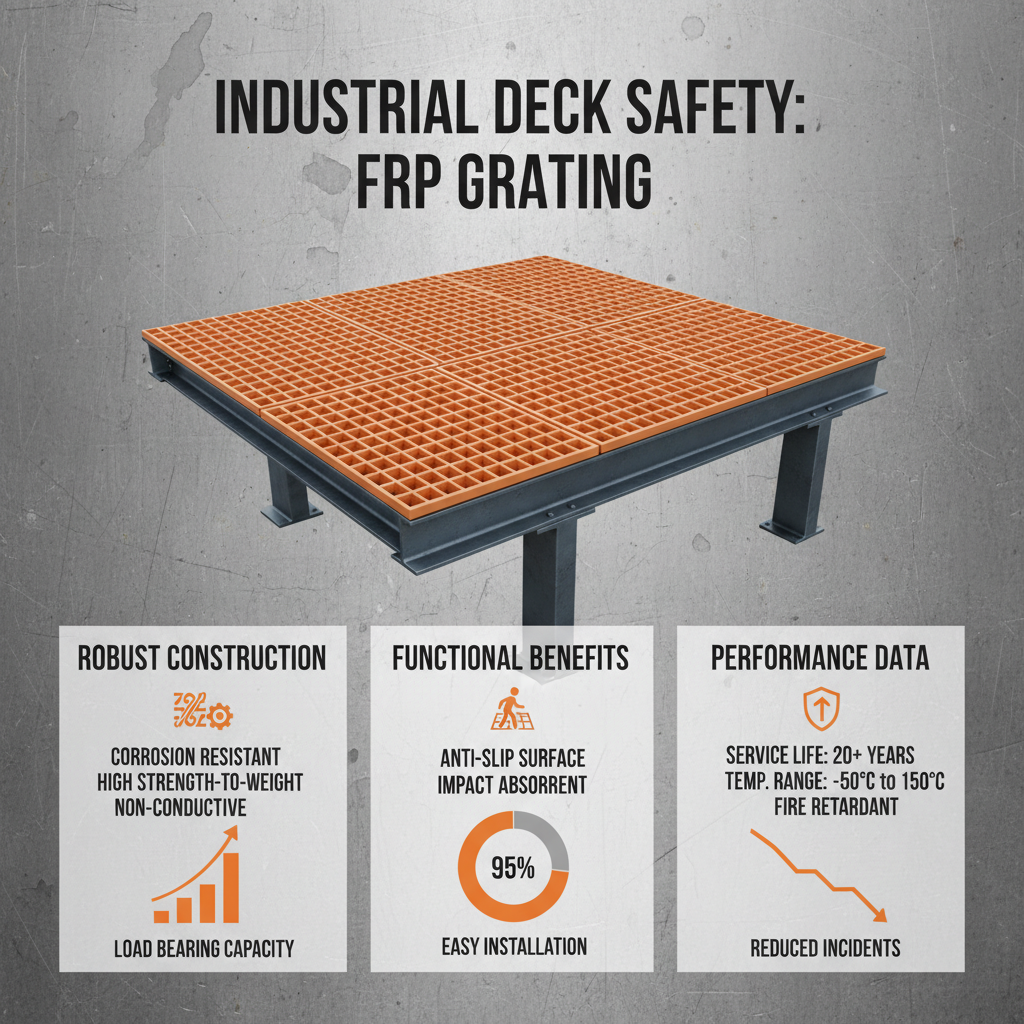
For industrial or high-traffic commercial decks, incorporating FRP Grating (Fiber Reinforced Polymer) can provide a superior alternative to wood. Because FRP materials can be engineered for high fire resistance and are naturally non-corrosive, they create a structural foundation where a grill on deck safe configuration is naturally more sustainable and less prone to ignition.
In addition to floor protection, the use of stainless steel heat deflectors and fire-rated bricks can further isolate the heat source. By combining a non-combustible base with strategic spatial planning, homeowners can enjoy the luxury of outdoor cooking without the constant anxiety of structural fire risks.
Comparative Safety Ratings of Decking Surfaces
Evaluating which materials make a grill on deck safe requires a look at thermal conductivity and flame spread indices. Traditional redwood and cedar, while aesthetically pleasing, are highly combustible. In contrast, composite decking reduces some risks but can melt and release toxic fumes when exposed to extreme point-source heat.
The introduction of advanced composite solutions, like Pultrusion Grating and SMC materials, has revolutionized the way we think about safety. These materials offer higher resistance to thermal degradation, ensuring that even if a grill is operated at high temperatures, the structural integrity of the deck remains compromised.
Surface Material Safety Index for Grill on Deck Safe Setup
Ventilation and Gas Leak Prevention Strategies
Ensuring a grill on deck safe configuration involves more than just heat management; gas safety is paramount. Propane and natural gas leaks can lead to explosive accumulations, especially if the grill is placed in a recessed area of the deck where air stagnates. Regular leak testing using soapy water on connections is a critical maintenance step.
Furthermore, using perforated surfaces like Micro Mesh Grating or Mini Mesh Grating beneath the grill area can significantly improve ventilation. These materials allow air to flow freely beneath the appliance, preventing the buildup of combustible gases and helping to dissipate heat more rapidly than solid decking boards.
Regulatory Compliance and Insurance Implications
Many homeowners overlook the legal and financial aspects of keeping a grill on deck safe. Local fire codes often have strict stipulations regarding the use of charcoal or gas grills on balconies and wooden decks. Failure to comply with these ordinances can lead to fines or, more seriously, the denial of insurance claims in the event of a fire.
Insurance providers typically evaluate the "risk profile" of a property. A deck with integrated safety features—such as fire-rated flooring and professional gas installation—is viewed more favorably than a makeshift setup. Documenting the safety measures you've taken, such as using a non-combustible FRP base, can provide peace of mind and potentially lower premiums.
In commercial settings, the requirements are even more stringent. ISO standards and local building codes often mandate the use of specific fire-resistant materials for any area designated as a cooking zone. Investing in high-grade, certified materials ensures that the business remains compliant while providing a safe environment for patrons.
Long-term Maintenance for Sustained Deck Safety
Maintaining a grill on deck safe setup is a continuous process rather than a one-time installation. Grease buildup is one of the most overlooked hazards; as oils accumulate on the grill and drip onto the deck, they create a highly flammable layer. Regular degreasing of the grill and the surrounding surface is essential.
Additionally, the structural integrity of the deck should be inspected annually. Heat can cause wooden boards to warp or crack over time, creating gaps where embers can fall through to the joists below. Checking for "charring" or discoloration on the deck surface can alert you to areas where heat protection is failing.
Finally, updating your safety equipment is vital. As new materials like advanced Pultrusion Profiles and fire-retardant composites become available, replacing old, worn-out mats or damaged decking can significantly enhance the safety profile of your outdoor space.
Comparison of Maintenance Requirements for Different Safety Setup Materials
| Material Type |
Heat Resistance |
Maintenance Frequency |
Lifespan Impact |
| Pressure Treated Wood |
Low (3/10) |
High (Monthly) |
Rapid degradation |
| Composite Decking |
Moderate (5/10) |
Medium (Quarterly) |
Risk of melting/warping |
| FRP Grating |
High (9/10) |
Low (Yearly) |
Extreme durability |
| Silicone Mats |
Moderate (7/10) |
High (Weekly Cleaning) |
Requires replacement |
| Concrete Slabs |
Max (10/10) |
Very Low (Yearly) |
Permanent solution |
| Stainless Steel Plates |
High (8/10) |
Low (Semi-annual) |
Corrosion resistant |
FAQS
Yes, it is possible provided you use a combination of distance and material barriers. By placing the grill 10 feet away from combustible walls and using a non-combustible base—such as a high-grade FRP grating or a certified fire mat—you significantly reduce the risk of ignition. Proper ventilation and regular maintenance of grease traps further ensure the setup remains safe.
Charcoal grills pose a higher risk due to flying embers and intense radiant heat. To keep a charcoal grill on deck safe, you must use a heavy-duty heat shield or a dedicated non-combustible landing area. Composite decking can melt under extreme heat, so a thermal barrier is non-negotiable for charcoal users.
Concrete is the gold standard, but for existing decks, FRP (Fiber Reinforced Polymer) Grating is an excellent choice. It offers a high strength-to-weight ratio, is resistant to chemicals and corrosion, and provides far better fire resistance than traditional wood or plastic composites.
Check your local fire code, but generally, a 3-foot clearance from any railing is recommended. If the railing is wooden or vinyl, heat can cause it to warp or ignite. If space is limited, install a heat-reflective shield between the grill and the railing to bounce radiant heat away.
While not always required, it is advisable to disclose permanent outdoor kitchens. However, if you have implemented professional safety measures, such as non-combustible FRP flooring and certified gas lines, this can actually demonstrate a commitment to risk reduction, which insurance companies appreciate.
Stop using the grill immediately. Charring is a sign that the material has reached its pyrolization point and is now significantly more flammable. Replace the damaged boards and upgrade your heat shielding—consider switching to a more durable, fire-resistant material like Pultrusion Grating to prevent a recurrence.
Conclusion
Ensuring a grill on deck safe environment is a multifaceted challenge that requires a proactive approach to material selection and spatial planning. From understanding the risks of radiant heat to implementing non-combustible barriers like FRP grating and maintaining strict clearance distances, the key lies in eliminating the "fuel" from the fire triangle. By prioritizing thermal isolation and regular maintenance, homeowners can blend the joy of outdoor cooking with the necessity of safety.
Looking forward, the integration of smart sensors for gas leak detection and the adoption of ultra-high-temperature resistant composites will continue to make outdoor kitchens safer. We encourage all deck owners to audit their current setups and invest in high-performance materials to safeguard their homes and families. For professional-grade, fire-resistant grating and structural solutions, visit our website: www.zjcomposites.com.