Building a safe deck is more than just a weekend home improvement project; it is a critical investment in structural integrity and occupant safety. Whether for a residential backyard or an industrial walkway, the primary objective remains the same: creating a stable, slip-resistant, and durable platform that can withstand environmental stressors and heavy load capacities without compromising the security of those using it.
From a global perspective, the shift toward advanced composite materials has revolutionized how we approach building a safe deck. Traditional timber, while aesthetically pleasing, often falls short in corrosive environments or high-humidity zones, leading to rot and sudden structural failure. Today, the integration of FRP (Fiber Reinforced Polymer) and pultrusion profiles ensures that safety is engineered into the very fabric of the material, reducing maintenance and long-term risk.
Understanding the synergy between load-bearing calculations, material selection, and rigorous installation standards is essential for any developer or homeowner. By prioritizing safety over shortcuts, you ensure a longevity that protects both the physical well-being of users and the financial value of the property. This guide explores the comprehensive requirements for achieving a gold standard in deck safety.
Global Standards for Building a Safe Deck
Across the globe, building a safe deck requires adherence to stringent building codes and international safety standards, such as those set by ISO and the International Residential Code (IRC). These guidelines are designed to prevent catastrophic collapses by mandating specific spacing for joists, requirements for ledger board attachment, and the use of approved fastening systems. In regions prone to seismic activity or extreme weather, these standards are even more rigorous to ensure that the structure can absorb energy without fracturing.
The challenge often lies in the gap between regulatory minimums and actual operational safety. Many failures occur not because the design was flawed, but because the materials used could not withstand the localized environmental chemistry—such as salt spray in coastal regions or chemical runoff in industrial plants. Transitioning to non-corrosive solutions like FRP Grating is now recognized as a global best practice for maximizing the safety lifespan of elevated platforms.
Defining Structural Safety in Decking
When we talk about building a safe deck, we are referring to a system where the structural capacity exceeds the maximum expected load by a predetermined safety factor. This means the deck is not just "strong enough" for a party, but engineered to handle unexpected surges in weight, wind uplift, and the gradual degradation of materials over decades.
Beyond the physics of load-bearing, safety encompasses the "user experience" of the surface. A deck is only safe if it is slip-resistant and free of hazards like splinters, protruding nails, or warping boards. This is where modern material science intersects with humanitarian needs, ensuring that elderly users or industrial workers can traverse a surface with total confidence, regardless of weather conditions.
Ultimately, a safe deck is defined by its resilience. It is a structure that maintains its geometric stability and surface integrity under stress. By integrating Pultrusion Grating and FRP profiles, engineers can create decks that are virtually immune to the decay that typically plagues organic materials, effectively redefining the baseline for safety in modern construction.
Core Components of a Secure Platform
The foundation of building a safe deck starts with the substructure. This includes the footings, posts, and beams that transfer the weight of the platform into the ground. If the footings are not set below the frost line or are improperly sized, the entire structure can shift, leading to railing failure or complete collapse.
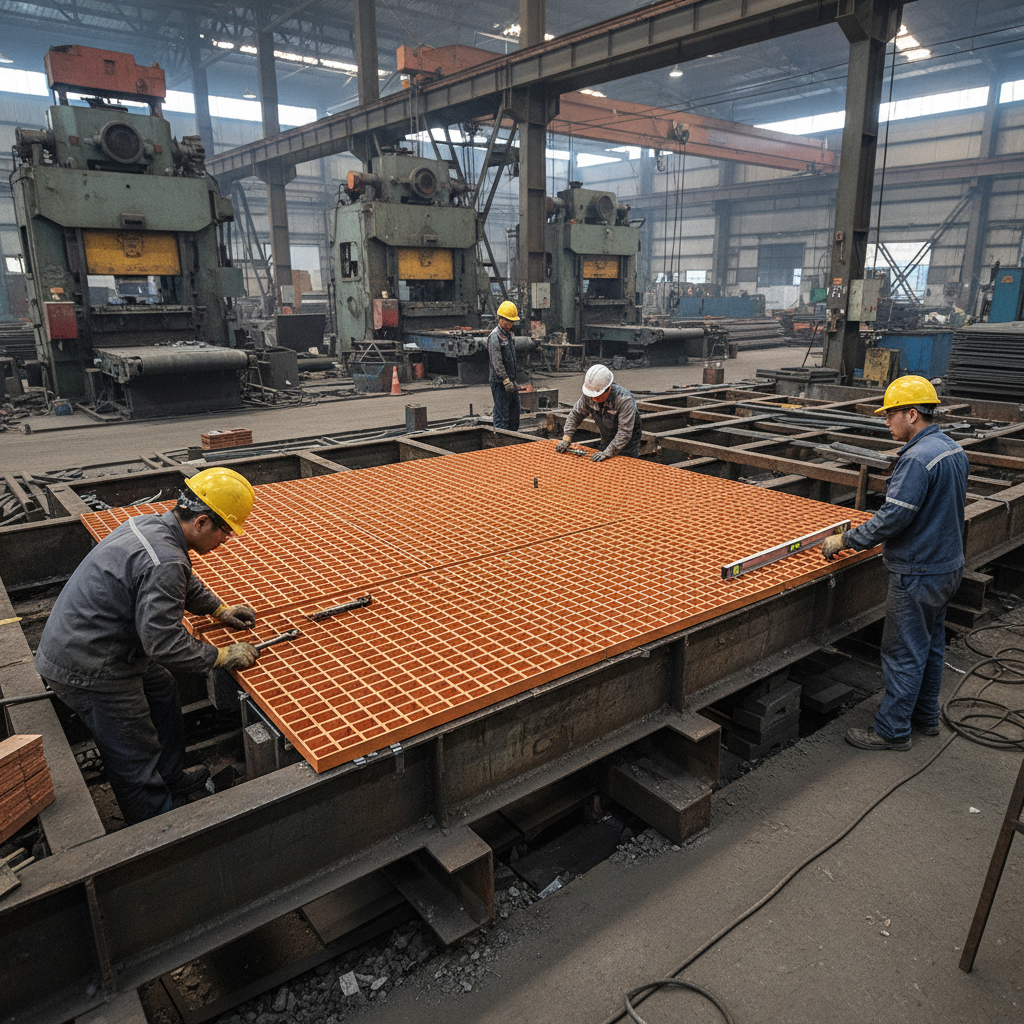
Equally important is the choice of decking surface. For those building a safe deck in harsh environments, FRP Grating offers a superior alternative to wood or steel. Its inherent slip-resistance and high strength-to-weight ratio ensure that the platform remains stable and safe for pedestrians even when wet or contaminated with oil.
Finally, the safety perimeter—the railings and balusters—serves as the last line of defense. A secure railing must be able to withstand significant lateral force without giving way. Using standardized FRP Pultrusion Profiles for handrails ensures a consistent, rust-proof barrier that maintains its structural integrity over time.
Material Performance and Load Capacity
Selecting the right material is the most critical decision when building a safe deck. Different materials react differently to stress and environmental exposure. While pressure-treated lumber is common, it is susceptible to moisture and insect damage, which can silently compromise the safety of the deck over time. In contrast, composite materials and FRP provide a predictable, linear performance curve.
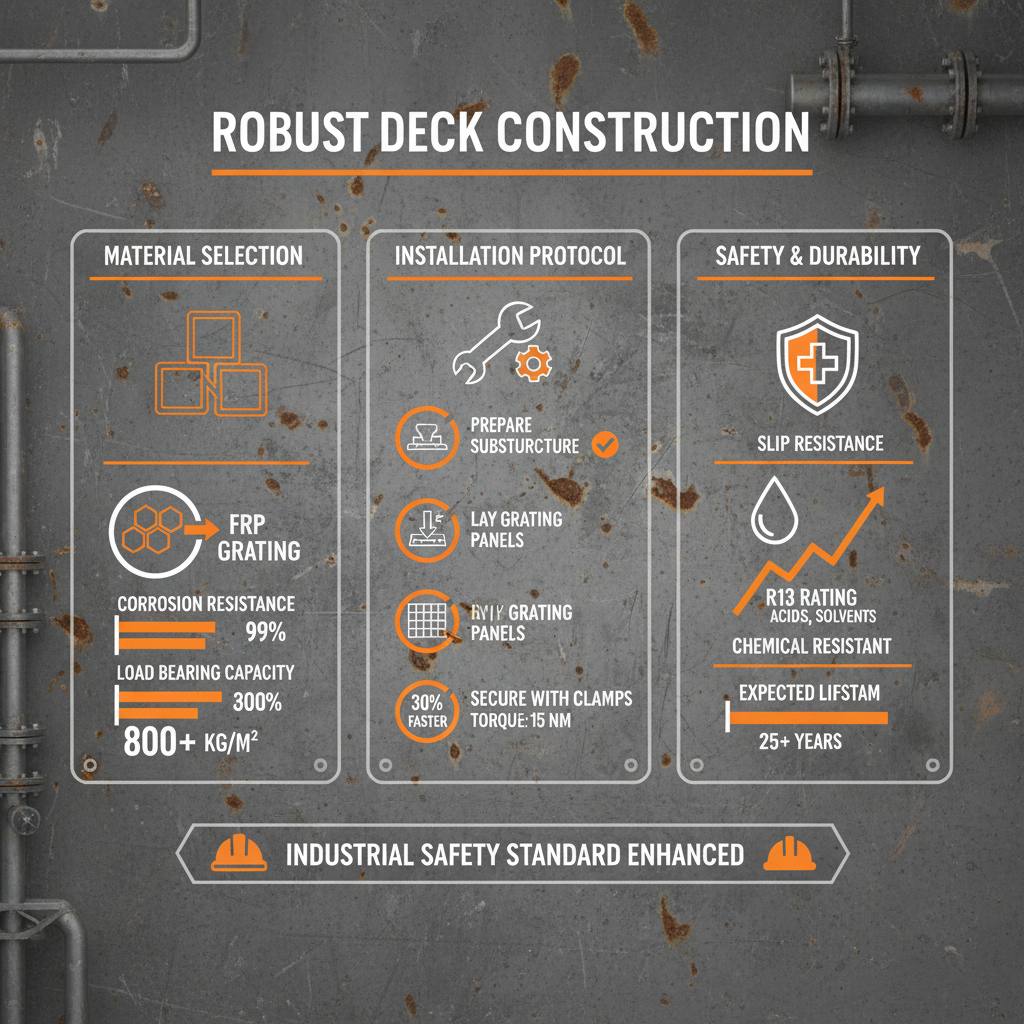
To truly quantify safety, one must look at the load-bearing capacity relative to the material's weight. FRP Grating, for instance, provides exceptional rigidity while remaining lightweight, which reduces the dead load on the supporting beams and allows for a more efficient, safer design.
Material Safety & Performance Ratings for Building a Safe Deck
Industrial Applications of Safe Decking
In industrial settings, the concept of building a safe deck scales up to include chemical resistance and fire retardancy. In oil refineries, wastewater treatment plants, and offshore rigs, the "deck" is often a network of walkways and platforms. Here, the use of Micro Mesh Grating and Mini Mesh Grating is essential to provide maximum traction and prevent the accumulation of hazardous liquids.
These applications demonstrate that safety is not just about preventing falls, but also about preventing workplace accidents caused by material failure. By deploying FRP Pressure Vessels and associated pultruded platforms, industries can ensure that maintenance crews can access dangerous areas via a stable, non-conductive, and non-corrosive surface, significantly lowering the risk of occupational injuries.
Long-term Value and Sustainability
The logical argument for investing in high-quality materials when building a safe deck is found in the Total Cost of Ownership (TCO). While the initial procurement of FRP or Stainless Steel Water Tank components might be higher than traditional wood, the absence of sanding, staining, and replacing rotted boards creates a massive long-term saving.
Beyond the financial aspect, there is an emotional value: peace of mind. Knowing that a deck is structurally sound and will not degrade under UV exposure or moisture provides a sense of security for the family or the workforce. This trust in the infrastructure allows for a more productive and relaxed use of the space.
From a sustainability lens, using durable composites reduces the demand for virgin timber and decreases the amount of chemically treated wood ending up in landfills. Building for longevity is the ultimate form of environmental responsibility, as it eliminates the cycle of "build-decay-replace."
Future Trends in Safety Engineering
The future of building a safe deck is being shaped by the integration of smart materials and digital twin technology. We are seeing the emergence of "sensing decks" where embedded fiber-optic sensors can detect structural strain or micro-fractures in real-time, alerting owners to maintenance needs before a failure occurs.
Furthermore, the push toward green energy is influencing material science. New bio-resins are being developed to make FRP Grating even more eco-friendly without sacrificing the strength or safety metrics. Automation in pultrusion is also allowing for more complex, custom-engineered shapes that fit specific architectural needs while maintaining rigorous safety tolerances.
As urban density increases, the demand for lightweight yet ultra-strong decking for rooftop gardens and modular elevated walkways will grow. The transition from "passive safety" (relying on material strength) to "active safety" (real-time monitoring and adaptive materials) will be the hallmark of the next generation of deck construction.
Comparative Analysis of Decking Material Safety Life-Cycles
| Material Type |
Corrosion Resistance |
Maintenance Level |
Safety Lifespan |
| FRP Grating |
Excellent |
Very Low |
25+ Years |
| Treated Pine |
Poor |
High |
7-12 Years |
| Galvanized Steel |
Moderate |
Medium |
15-20 Years |
| Stainless Steel |
High |
Low |
30+ Years |
| WPC Composite |
Good |
Low |
15-20 Years |
| Pultrusion Profiles |
Excellent |
Very Low |
25+ Years |
FAQS
The most critical factor is the integrity of the substructure combined with the suitability of the surface material. While a beautiful surface is nice, the footings and joists must be engineered to handle the specific load requirements of the area. Using non-corrosive materials like FRP ensures that this structural integrity is not compromised by rot or rust over time.
Yes, especially in wet or industrial environments. FRP grating is engineered for slip resistance and does not warp, crack, or rot. Unlike wood, it doesn't produce splinters and maintains a consistent friction coefficient, which drastically reduces the risk of slip-and-fall accidents.
Load capacity is typically calculated based on "Dead Load" (the weight of the materials) and "Live Load" (people, furniture, snow). For residential decks, this is usually around 40 lbs per square foot, but industrial platforms require much higher ratings. Consulting a structural engineer is recommended to ensure the safety factor meets local building codes.
For wooden decks, a comprehensive safety check should be done annually, focusing on the ledger board and railing stability. For FRP or composite decks, a visual inspection every 2-3 years is usually sufficient, as these materials are far more stable and resistant to environmental decay.
Yes, this is a common hybrid approach. However, ensure that the fasteners used are compatible with both materials. Using stainless steel or galvanized screws prevents the "galvanic corrosion" that can occur when different metals or treated woods react, ensuring the connection remains tight and safe.
Key warning signs include visible sagging of the floorboards, wobbly railings, cracks in the support posts, or a "spongy" feeling when walking. If you notice the deck pulling away from the house (ledger separation), it is a critical safety risk and should be addressed immediately.
Conclusion
Building a safe deck is a multi-faceted process that blends rigorous engineering, careful material selection, and a commitment to long-term maintenance. By moving away from traditional, perishable materials and embracing advanced solutions like FRP Grating and pultrusion profiles, we can create structures that not only meet current safety codes but exceed them. The synergy of high load capacity, slip resistance, and corrosion immunity forms the bedrock of a truly secure platform.
Looking forward, the integration of sustainable composites and smart monitoring technology will make the process of building a safe deck more intuitive and reliable. Whether you are upgrading a residential space or designing a complex industrial walkway, prioritizing quality and safety today prevents the costly and dangerous failures of tomorrow. Invest in durability, invest in safety. Visit our website for professional solutions: www.zjcomposites.com