
loading...
- No. 9, Xingyuan South Street, Dongwaihuan Road, Zaoqiang County, Hengshui, Hebei, China
- admin@zjcomposites.com
- +86 15097380338
- Welcome to visit our website!

FRP Grating Suppliers: Micro Mesh, Strong & Corrosion-Resistant
Understanding FRP Grating: A Comprehensive Guide for Industrial Applications
Fiber Reinforced Polymer (FRP) grating represents a paradigm shift in industrial flooring, walkways, and structural applications, offering unparalleled benefits over traditional materials like steel and aluminum. For businesses seeking reliable and high-performance solutions, choosing the right frp grating suppliers is paramount. This article delves into the technical intricacies, application advantages, and market dynamics surrounding FRP grating, providing B2B decision-makers with the insights needed to make informed procurement choices.
FRP grating, also known as GRP (Glass Reinforced Plastic) grating, is engineered from a combination of resin systems and continuous glass fibers, forming a robust, lightweight, and incredibly durable composite material. Its superior corrosion resistance, high strength-to-weight ratio, and non-conductive properties make it indispensable across a multitude of challenging industrial environments.
The Manufacturing Process of FRP Grating: From Resin to Resilience
The quality and performance of FRP grating are directly attributable to its sophisticated manufacturing process. Reputable frp grating suppliers adhere to stringent production protocols to ensure product integrity and longevity. The primary methods for producing FRP grating are molded and pultruded processes.
1. Molded FRP Grating Process:
- Mold Preparation: A pre-designed mold, typically constructed from polished steel or fiberglass, is cleaned and treated with a release agent.
- Fiberglass Placement: Continuous glass fiber rovings and mats are strategically placed into the mold cavities. The arrangement dictates the grating's bidirectional strength.
- Resin Saturation: A liquid resin mixture, comprising thermosetting resin (e.g., orthophthalic, isophthalic, vinyl ester, phenolic), catalyst, UV inhibitors, and other additives, is poured over the fiberglass. The resin saturates the fibers, encapsulating them.
- Curing: The mold is then heated, initiating a chemical reaction (polymerization) that cures the resin, transforming it from a liquid to a solid, rigid material. This cross-linking process locks the fibers in place and imparts the grating's structural properties.
- Post-Curing & Demolding: After primary curing, the grating may undergo a post-cure phase to optimize mechanical properties. Once fully cured, the panel is demolded and inspected.
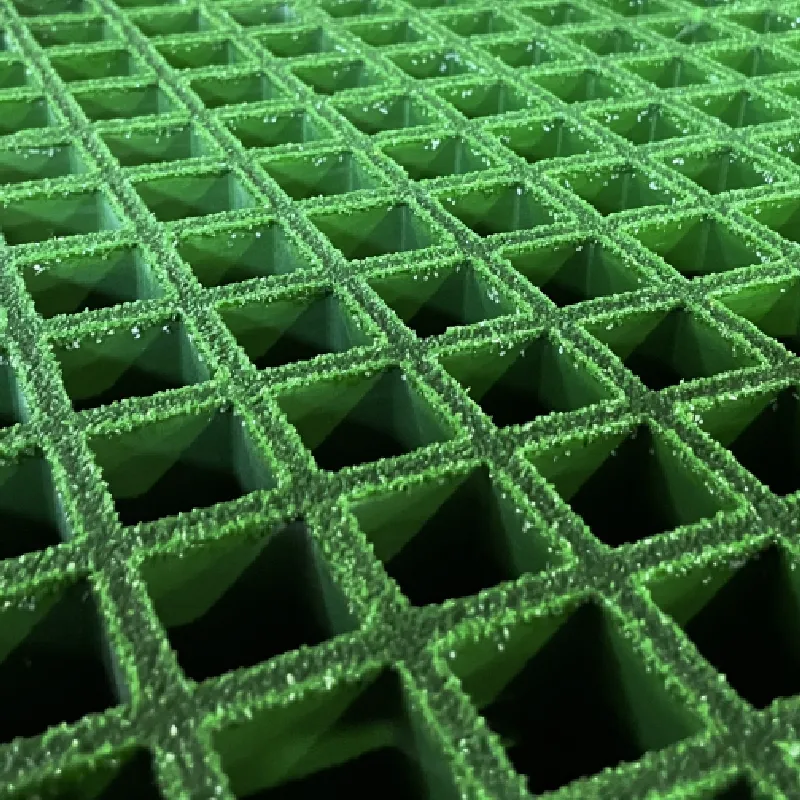
- Finishing: Excess resin is trimmed, and a grit top (silica sand or aluminum oxide) may be applied for enhanced anti-slip properties, adhering to standards like ASTM F1679 for slip resistance.
2. Pultruded FRP Grating Process:
- Fiber Reinforcement Feed: Continuous glass fiber rovings and mats are pulled through guides and into a resin impregnation bath.
- Resin Impregnation: The fibers are saturated with a carefully formulated liquid resin system (similar to molded grating, but optimized for pultrusion), ensuring complete wet-out.
- Shaping Die: The saturated fibers are then pulled through a heated steel die, which shapes the profile (e.g., I-beams, T-bars, rods) of the individual bearing bars and cross rods.
- Curing: Inside the heated die, the resin rapidly cures, forming a solid, dimensionally stable profile.
- Pulling Mechanism: A continuous pulling device (pultruder) draws the cured profiles from the die at a controlled speed.
- Assembly: The individual pultruded bearing bars and cross rods are then assembled (typically by mechanically locking or bonding) to form the finished grating panel.
- Finishing: Similar to molded grating, anti-slip surfaces can be applied.
Testing Standards and Service Life:
Reliable frp grating suppliers subject their products to rigorous testing to meet international standards such as ASTM (American Society for Testing and Materials) for mechanical properties (e.g., ASTM D638 for tensile strength, ASTM D790 for flexural strength), fire ratings (e.g., ASTM E84), and slip resistance (e.g., ANSI/UL 1998, NFPA 1901). The service life of quality FRP grating can exceed 20 years, even in harsh industrial environments, significantly outperforming metallic alternatives which often succumb to corrosion much sooner.
Technical Specifications and Product Parameters
The selection of FRP grating involves a detailed understanding of its technical parameters. Key specifications include resin type, panel size, mesh configuration, and load-bearing capacity.
Resin Systems:
- Orthophthalic Polyester: General purpose, economical, good corrosion resistance to mild chemicals.
- Isophthalic Polyester: Enhanced corrosion resistance, suitable for a wider range of chemicals, moderate-to-severe environments.
- Vinyl Ester: Excellent corrosion resistance to highly aggressive chemicals, high temperatures, and acids. Often specified for petrochemical and chemical processing plants.
- Phenolic: Superior fire resistance, low smoke and toxic fume emission, ideal for offshore, oil & gas, and transportation sectors.
Mesh Configurations:
- Standard Mesh: Typically square or rectangular openings (e.g., 38x38mm, 50x50mm), offering balanced strength and open area.
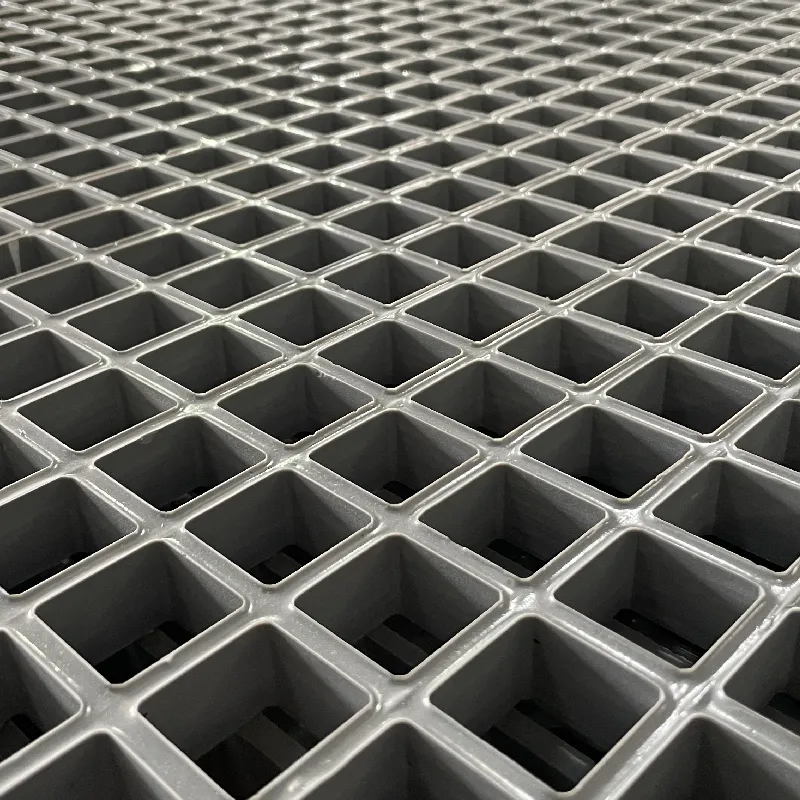
- FRP Micro Mesh Grating: Featuring smaller openings (e.g., 19x19mm, 12x12mm), designed to prevent small objects from falling through and often required for pedestrian safety, especially where high heels or rolling equipment are present. Offers enhanced load distribution for smaller contact areas.
Key Product Specifications Table: Anti Slip and Factory Outlet Standard Mesh FRP GRP Grating
| Parameter | Typical Value/Description |
|---|---|
| Material Composition | E-Glass Fiberglass & Unsaturated Polyester Resin (Orthophthalic, Isophthalic, Vinyl Ester options) |
| Standard Panel Size | 1220x3660mm (4'x12'), 1220x2440mm (4'x8'), 995x3000mm (custom sizes available) |
| Standard Mesh Size | 38x38mm, 50x50mm, 25x25mm (Square Mesh); FRP Micro Mesh Grating also available |
| Grating Thickness | 25mm (1"), 30mm (1.25"), 38mm (1.5"), 50mm (2"), 60mm (2.36") |
| Surface Type | Concave (standard), Grit (anti-slip), Smooth (upon request) |
| Load Capacity (38x38x38mm, 1.5" thickness) | Deflection: <1/8" at 200lbs (90.7kg) point load over 48" (1219mm) span |
| Operating Temperature Range | -50°C to +100°C (Resin dependent) |
| Fire Rating | ASTM E84 Class 1 (Flame Spread Index ≤ 25 for Vinyl Ester/Phenolic) |
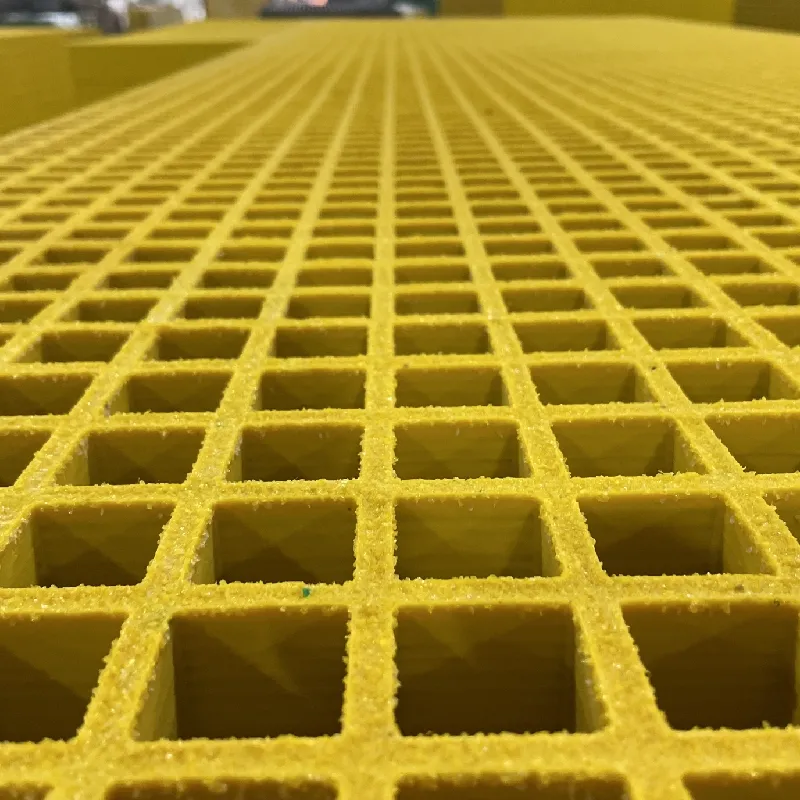
| Color Options | Grey, Yellow, Green, Red, Blue (custom colors available) |
| Density | Approx. 1.8 g/cm³ (112 lbs/ft³) |
| UV Resistance | Excellent, with UV inhibitors integrated into the resin |
Application Scenarios and Target Industries
The versatility of FRP grating makes it an optimal solution across a diverse array of industries, particularly where traditional materials fail to meet stringent safety, corrosion, or maintenance requirements. Leading frp grating suppliers serve these critical sectors:
Target Industries:
- Petrochemical and Chemical Processing: Ideal for walkways, platforms, trench covers, and structural components in highly corrosive environments where acids, alkalis, and solvents are present. Corrosion resistance is a primary advantage.
- Oil & Gas (Onshore and Offshore): Used for offshore platforms, drilling rigs, refineries, and storage facilities due to its non-corrosive nature, low maintenance, and fire-retardant properties.
- Water and Wastewater Treatment Plants: Suitable for clarifier covers, access ways, filter media, and headworks because it resists the aggressive chemicals and constant moisture.
- Power Generation: Applicable in cooling towers, scrubber systems, and substations where electrical insulation and fire resistance are crucial.
- Food and Beverage: Hygenic, easy-to-clean, and corrosion-resistant, making it suitable for processing areas where frequent washdowns and exposure to sanitizers occur.
- Metallurgy and Mining: Provides durable solutions for harsh conditions, including exposure to minerals, moisture, and heavy loads, often in areas where metal alternatives would quickly degrade.
- Marine and Shipbuilding: Decks, gangways, and equipment platforms benefit from FRP's resistance to saltwater, UV radiation, and its lightweight properties.
- Architectural and Commercial: Aesthetic appeal combined with durability makes it suitable for decorative elements, sunscreens, and elevated walkways in public spaces.
Typical Application Scenarios & Advantages:
- Walkways and Platforms: FRP grating offers superior anti-slip properties, reducing workplace accidents. Its lightweight nature simplifies installation, leading to energy savings in construction and transport.
- Trench and Pit Covers: Provides safe access while resisting corrosion from underground gases and liquids. Its non-conductive property enhances safety in areas with electrical hazards.
- Stair Treads: High load capacity and anti-slip surfaces ensure safety and durability for heavy foot traffic.
- Catwalks and Access Ways: Reduces maintenance costs significantly due to its inherent resistance to rust and degradation.
- Ramps: Offers slip resistance even when wet or oily, crucial for safe movement of personnel and equipment.
Technical Advantages and Industry Trends
The burgeoning adoption of FRP grating stems from its intrinsic technical advantages, which align with evolving industry trends towards sustainability, safety, and operational efficiency. Forward-thinking frp grating suppliers are at the forefront of these developments.
Key Technical Advantages:
- Superior Corrosion Resistance: Unlike steel, FRP does not rust or corrode, even when exposed to a wide range of aggressive chemicals, salt water, or continuous moisture. This drastically reduces maintenance costs and extends service life.
- High Strength-to-Weight Ratio: FRP grating is significantly lighter than steel, often by as much as 70%, while offering comparable or superior load-bearing capacity. This translates to easier handling, lower transportation costs, and reduced structural support requirements.
- Non-Conductive and Non-Magnetic: Inherently electrical and thermal insulators, FRP gratings are safe for use in environments with electrical hazards and sensitive electronic equipment.
- Impact Resistance: FRP has a higher elastic modulus and can absorb impact without permanent deformation, unlike metal gratings which may bend or dent.
- Low Maintenance: Requires no painting, sandblasting, or rust removal, dramatically lowering long-term operational expenses.
- Anti-Slip Surface: Integrated grit surfaces provide excellent traction, even in wet or oily conditions, enhancing workplace safety.
- Fire Retardant Options: Available with fire-retardant resins that meet stringent safety codes, such as ASTM E84 Class 1.
- UV Resistance: Formulations include UV inhibitors to prevent degradation from prolonged sun exposure, ensuring color stability and structural integrity outdoors.
Industry Trends:
- Increased Safety Regulations: Growing emphasis on workplace safety drives demand for non-slip, non-conductive, and fire-retardant materials.
- Sustainable Infrastructure: The long lifespan and low maintenance of FRP contribute to sustainable construction practices, reducing material consumption and waste over time.
- Customization and Modularity: Advances in manufacturing allow for highly customized solutions, including specific resin formulations, colors, and panel dimensions, enabling seamless integration into complex industrial designs. The rise of frp micro mesh grating for enhanced safety and specific load distribution is a clear example of this trend.
- Digital Integration (Industry 4.0): Some manufacturers are leveraging digital tools for design optimization, predictive maintenance scheduling, and supply chain management, improving efficiency and project delivery.
Vendor Comparison and Customized Solutions
Selecting the right frp grating suppliers is a critical decision that impacts project timelines, budget, and long-term performance. A thorough vendor comparison goes beyond initial price, focusing on capabilities, certifications, and support.
FRP Grating vs. Traditional Materials: A Comparison Table
| Feature | FRP Grating | Steel Grating | Aluminum Grating |
|---|---|---|---|
| Corrosion Resistance | Excellent (Resists acids, alkalis, salts) | Poor (Rusts readily without coating) | Good (Oxidizes, not ideal for strong chemicals) |
| Weight | Very Light (approx. 1/4 of steel) | Heavy | Light (approx. 1/3 of steel) |
| Electrical Conductivity | Non-conductive | Conductive | Conductive |
| Impact Resistance | High (Elastic recovery) | Moderate (Dents/bends) | Low (Easily dents) |
| Installation Cost | Lower (Easy to cut, light weight) | Higher (Heavy, requires welding) | Moderate |
| Maintenance Cost | Very Low (No painting, rust removal) | High (Painting, rust removal) | Low (Corrosion resistant, but susceptible to abrasion) |
| Life Cycle Cost | Lowest | Highest | Moderate |
Customized Solutions:
Leading frp grating suppliers offer comprehensive customization capabilities to meet unique project requirements:
- Resin Formulations: Tailoring resin systems for specific chemical resistance, fire ratings, or UV stability.
- Panel Sizes and Cuts: Precision cutting to exact dimensions, including complex shapes and openings, minimizes on-site fabrication and waste.
- Mesh Configurations: From standard square mesh to narrow slot options or frp micro mesh grating for enhanced safety and object retention.
- Color Matching: Custom pigments to match corporate branding or specific safety requirements.
- Surface Finishes: Beyond standard concave and grit, options for smooth surfaces or specialized non-slip coatings.
- Accessories: Providing a full suite of clips, fasteners, and structural supports designed for FRP grating.
When evaluating frp grating suppliers, consider their engineering support, capacity for bespoke solutions, and adherence to international quality standards (e.g., ISO 9001 certification).
Application Case Studies & Client Testimonials
Real-world applications underscore the effectiveness and reliability of FRP grating. These examples highlight the tangible benefits clients experience from partnering with experienced frp grating suppliers.
Case Study 1: Wastewater Treatment Plant Upgrade
Challenge: An aging municipal wastewater treatment plant faced severe corrosion issues with its existing galvanized steel walkways and trench covers, leading to frequent maintenance and safety concerns due to slippery surfaces and structural degradation from hydrogen sulfide and chlorine exposure.
Solution: The plant opted to replace all metal structures with FRP molded grating, specifically using an Isophthalic polyester resin system for enhanced chemical resistance and a grit top surface for superior slip protection. Custom-cut panels and stair treads were supplied, ensuring a perfect fit for existing infrastructure.
Outcome: Within six months of installation, the plant reported a significant reduction in maintenance hours dedicated to grating repairs. Worker safety improved demonstrably due to the reliable non-slip surface. The life cycle cost analysis projected savings of over 40% compared to continued use and repair of steel grating over 15 years.
Case Study 2: Offshore Oil Platform Decking
Challenge: An offshore oil platform required lightweight, fire-retardant, and highly corrosion-resistant decking for new expansion modules. Traditional steel grating posed weight issues, increasing structural load, and demanded constant upkeep due to saltwater exposure.
Solution: Pultruded FRP grating with a Phenolic resin system was chosen. This offered exceptional fire performance (meeting IMO FTP Code) and superior resistance to marine environments and various hydrocarbons. The lightweight nature allowed for easier installation and reduced the overall dead load on the platform structure.
Outcome: The project saved approximately 30% in installation time due to the ease of handling and cutting FRP. The platform engineers noted a marked improvement in safety due to the non-sparking properties and stable footing provided by the FRP grating. After three years, the FRP decking showed no signs of degradation, even in high-splash zones.
Client Feedback:
"Our chemical facility has been using FRP grating from [Supplier Name] for over a decade. The initial investment has paid for itself many times over in reduced maintenance and enhanced safety. Their customized frp micro mesh grating was perfect for our sensitive areas."
— Operations Manager, Major Chemical Manufacturer
Trustworthiness: FAQs, Lead Times, Warranty, and Support
Establishing trust is fundamental in B2B relationships. Reputable frp grating suppliers provide transparency in their operations, products, and post-sales support.
Frequently Asked Questions (FAQs):
- Q: Is FRP grating suitable for heavy vehicle traffic?
- A: While lighter than steel, FRP grating is engineered for specific load capacities. For heavy vehicle traffic, specific heavy-duty FRP grating designs with thicker sections and smaller mesh sizes are available. It's crucial to provide load specifications to your supplier for appropriate selection.
- Q: How does the cost of FRP grating compare to steel?
- A: Initial material cost for FRP grating can sometimes be higher than basic galvanized steel. However, when considering the total life cycle cost, including installation (lighter, easier to cut), maintenance (no painting, rust removal), and longer service life in corrosive environments, FRP typically offers a significantly lower overall cost of ownership.
- Q: Can FRP grating be cut on-site?
- A: Yes, FRP grating can be easily cut on-site using standard power tools (e.g., circular saw with a diamond-tipped blade). It's essential to wear appropriate PPE (dust mask, safety glasses) to protect against dust and fibers. Cut edges should be sealed with a resin coating to maintain corrosion resistance.
- Q: What is the typical lead time for custom orders?
- A: Lead times vary based on order complexity and current production schedules. For standard panels, lead times can be 1-2 weeks. Custom orders, including special resins or precise cuts, typically require 3-6 weeks, depending on design approval and material sourcing. Always confirm lead times with your supplier during the quotation phase.
Lead Time and Fulfillment:
Efficient logistics and transparent fulfillment processes are vital. Leading frp grating suppliers maintain robust inventory levels for standard products and leverage advanced production planning for custom orders. Typical fulfillment for stock items ranges from 5-10 business days, while made-to-order solutions can take 3-6 weeks. Expedited shipping options are often available for urgent projects.
Warranty Commitments:
Reputable suppliers stand behind their products. A standard warranty for FRP grating typically covers manufacturing defects for 5 to 10 years, ensuring the material performs as specified under normal operating conditions. It's crucial to review the warranty terms and conditions, especially regarding chemical exposure and load specifications.
Customer Support and After-Sales Service:
Comprehensive customer support is a hallmark of trusted frp grating suppliers. This includes technical assistance during specification, detailed installation guides, and readily available support for any post-purchase inquiries. Dedicated account managers and technical engineers ensure that clients receive expert guidance throughout the project lifecycle, from initial concept to long-term operational success.
Conclusion
The strategic integration of FRP grating offers significant long-term value for industrial applications, driven by its exceptional durability, corrosion resistance, and safety features. Partnering with expert frp grating suppliers who prioritize quality, customization, and comprehensive support is crucial for optimizing project outcomes and achieving sustainable operational excellence. By understanding the technical advantages, manufacturing processes, and diverse application scenarios, businesses can confidently leverage FRP grating to enhance infrastructure, improve safety, and reduce life cycle costs.
References
- ASTM International. "Standard Specification for Fiber-Reinforced Polymer (FRP) Grating Used in Floor Systems." ASTM F1679.
- The Composites and Advanced Materials Association (CAMA). "FRP Grating Design Manual."
- Fiber Reinforced Polymer Composites in Construction. "Structural Engineering of FRP Composites for Infrastructure Applications."
- Corrosion Engineering: Principles and Practice. "Corrosion Resistance of Polymer Composites in Industrial Environments."
- The Society for the Advancement of Material and Process Engineering (SAMPE). "Advances in Pultrusion Technology for High-Performance Composites."
-
High Quality Fiberglass Rods for Electric Fence Insulation GuideNewsApr.16,2026
-
Benefits and Guide of Installing a White Fiberglass FenceNewsApr.09,2026
-
Choosing the Right Fibreglass Fence for Property Enhancement and LongevityNewsApr.07,2026
-
Comprehensive Guide to Durable Fiberglass Fence Rods and Their ApplicationsNewsMar.31,2026
-
Comprehensive Guide to Durable Fiberglass Fence Post Solutions for Various ApplicationsNewsMar.28,2026
-
Comprehensive Guide to Fiberglass Fencing Benefits and ApplicationsNewsMar.26,2026
-
Comprehensive Guide to Choosing the Right Safety Guard System for Industrial ProtectionNewsMar.24,2026