
loading...
- No. 9, Xingyuan South Street, Dongwaihuan Road, Zaoqiang County, Hengshui, Hebei, China
- admin@zjcomposites.com
- +86 15097380338
- Welcome to visit our website!

Durable Large Square Stainless Steel Water Tanks
Understanding Large Square Water Tanks: An Industry Overview
The industrial landscape's escalating demand for efficient and secure fluid storage solutions has propelled large square water tanks into a critical infrastructure component across diverse sectors. These tanks, particularly those fabricated from stainless steel, are not merely storage vessels but sophisticated engineering solutions designed for longevity, hygiene, and chemical compatibility. The burgeoning focus on sustainability, coupled with stringent regulatory frameworks concerning water quality and environmental protection, drives the preference for materials like SS304 and SS316L, which offer superior corrosion resistance and inertness. Industry trends indicate a significant shift from traditional concrete or carbon steel tanks to advanced stainless steel alternatives due to their reduced maintenance requirements, extended service life, and inherent anti-bacterial properties. This transition is further fueled by the increasing complexity of industrial processes that necessitate precise control over stored media, including potable water, process water, chemicals, and even certain types of wastewater. Our product, the Quality Assurance Food Grade Stainless Steel Water Tank for Storage Water, exemplifies this evolution, meeting the rigorous demands of sectors like food and beverage, pharmaceuticals, and municipal water treatment, where absolute purity and contamination prevention are non-negotiable. The rectangular design optimizes space utilization, a crucial factor in urbanized industrial zones where footprint minimization directly impacts operational efficiency and cost.
Beyond their physical attributes, the economic impetus for adopting large square water tanks is undeniable. While the initial capital outlay for stainless steel might be higher than conventional materials, the total cost of ownership (TCO) is substantially lower over the tank's operational lifespan. This is primarily attributed to their exceptional durability, minimal need for repairs or liner replacements, and inherent resistance to degradation from UV radiation, extreme temperatures, and aggressive chemicals. Furthermore, the inherent recyclability of stainless steel aligns with contemporary corporate sustainability goals, offering an environmentally responsible choice. The adaptability of these tanks to various pressure ratings and temperature ranges makes them suitable for an expansive array of applications, from ambient water storage to heated process fluids. This versatility positions them as a cornerstone in modern industrial fluid management strategies, enabling businesses to achieve higher operational reliability and compliance with ever-tightening environmental and public health regulations. The demand for customized solutions, tailored to specific volume requirements and site constraints, is also on an upward trajectory, highlighting the market’s need for agile manufacturing capabilities that can deliver bespoke stainless steel water tank rectangular configurations with precision engineering.
Technical Parameters and Advanced Specifications
The performance of large square water tanks hinges on a meticulous understanding of their technical parameters and material science. Primarily, our tanks leverage high-grade stainless steel, predominantly AISI 304 or AISI 316L, selected based on the specific application's corrosive environment and temperature demands. AISI 304 offers excellent resistance to a wide range of atmospheric environments and many corrosive media, making it suitable for potable water and general industrial applications. For more aggressive environments, such as those involving chlorides or higher temperatures, AISI 316L (with its enhanced molybdenum content) provides superior resistance to pitting and crevice corrosion. Tank construction typically involves modular panel design for ease of transport and on-site assembly, or fully welded structures for maximum integrity in permanent installations. Key design considerations include internal baffling, anti-vortex plates, and appropriate inlet/outlet configurations to ensure optimal fluid dynamics and prevent dead zones. The structural integrity is rigorously calculated to withstand hydrostatic pressure, seismic loads, and external environmental factors, adhering to international standards such as ASME Boiler and Pressure Vessel Code (BPVC) or Eurocode.
Dimensional flexibility is a hallmark of our stainless steel water tank rectangular offerings. Volumes can range from a few cubic meters for specialized industrial processes to thousands of cubic meters for municipal water storage or large-scale manufacturing facilities. Operating pressure usually aligns with atmospheric conditions for most storage applications, but customized designs can accommodate moderate positive or negative pressures. Temperature endurance is also critical, with stainless steel offering stability across a broad spectrum, typically from -30°C to over 100°C for aqueous solutions, without compromising material integrity or inducing thermal degradation. Surface finishes play a vital role in hygiene and corrosion resistance; polished internal surfaces, often to a #4 or mirror finish, reduce bacterial adhesion and facilitate easier cleaning, particularly crucial for food-grade applications. Each tank undergoes non-destructive testing (NDT) such as hydrostatic testing, dye penetrant inspection, and ultrasonic testing to verify weld integrity and structural soundness before dispatch. Our commitment to these stringent specifications ensures that each large square water tanks unit delivers unparalleled reliability and performance throughout its operational lifecycle.
Typical Specifications for Large Square Water Tanks (Stainless Steel)
| Parameter | AISI 304 Stainless Steel | AISI 316L Stainless Steel |
|---|---|---|
| Material Composition | 18% Chromium, 8% Nickel | 16% Chromium, 10% Nickel, 2% Molybdenum |
| Corrosion Resistance | Good, for general purpose and potable water | Excellent, superior resistance to pitting and crevice corrosion |
| Capacity Range (typical) | 1 m³ to 5000 m³ | 1 m³ to 5000 m³ (often preferred for higher-value liquids) |
| Plate Thickness | 1.0 mm to 5.0 mm (based on size/application) | 1.0 mm to 5.0 mm (based on size/application) |
| Operating Temperature | -30°C to +100°C | -30°C to +100°C (better at elevated temperatures with corrosive media) |
| Expected Lifespan | 30-50+ years with proper maintenance | 40-60+ years with proper maintenance |
| Compliance Standards | ISO 9001, NSF/ANSI 61, FDA, AWWA D103 | ISO 9001, NSF/ANSI 61, FDA, AWWA D103, often ASME BPE for Pharma |
Detailed Manufacturing Process Flow for Quality Assurance Tanks
The production of our large square water tanks follows a rigorous, multi-stage manufacturing process designed to ensure structural integrity, material purity, and compliance with the highest industry standards. The journey begins with the meticulous selection of raw materials, exclusively certified food-grade stainless steel coils or sheets (AISI 304 or 316L), each accompanied by material test reports (MTRs) to guarantee traceability and chemical composition. Stage 1: Material Preparation and Precision Cutting. Upon arrival, stainless steel sheets undergo thorough inspection for surface defects or imperfections. Advanced CNC (Computer Numerical Control) laser cutting or plasma cutting machines are then employed to precisely cut the tank panels, stiffeners, and accessories according to digital design specifications. This ensures high dimensional accuracy and minimizes material waste. Stage 2: Forming and Pressing. The cut panels are transferred to hydraulic presses equipped with specialized molds. Here, processes like cold pressing or deep drawing are utilized to form the specific geometries of the tank panels – often featuring corrugated or ribbed designs to enhance structural strength and rigidity, particularly for our stainless steel water tank rectangular configurations. This stage is critical for achieving the required panel flatness and consistent dimensions for subsequent assembly.
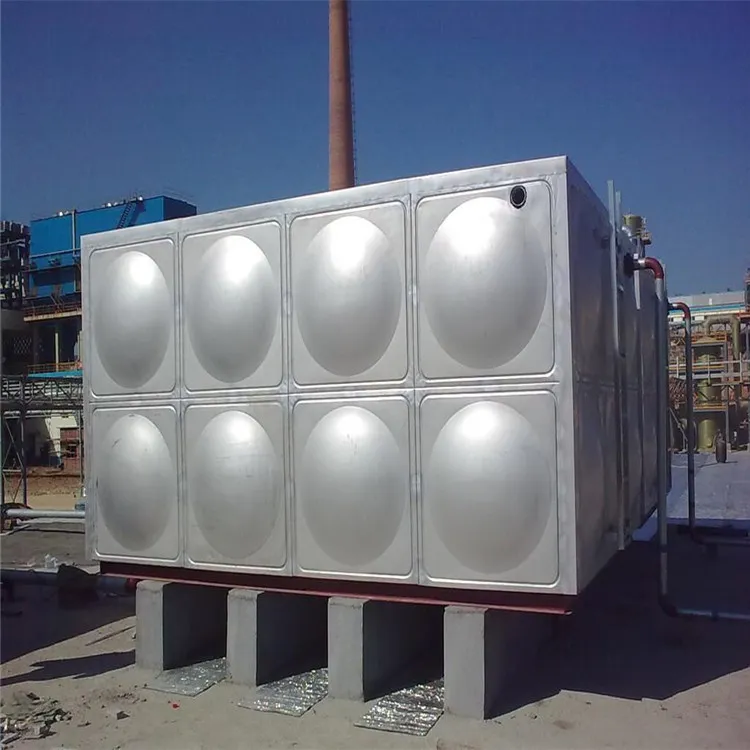
Stage 3: Welding and Assembly. For fully welded tanks, skilled welders utilize advanced welding techniques such as TIG (Tungsten Inert Gas) or MIG (Metal Inert Gas) to join the panels, ensuring full penetration welds that are free from porosity or cracks. Robotic welding may be employed for high-volume production to ensure consistency. For modular, bolted tank systems, the panels are prepared with pre-drilled holes, and specialized food-grade sealing materials (e.g., EPDM rubber) are precisely applied before assembly. Internal support structures, baffles, and pipe connections are also integrated at this stage. All welding procedures adhere to ASME (American Society of Mechanical Engineers) or equivalent international welding codes to guarantee mechanical integrity. Stage 4: Surface Treatment and Passivation. Post-welding, tanks undergo rigorous cleaning and surface treatment. This includes pickling, which removes scale and impurities from the welding zones, and passivation, a crucial chemical process that restores the passive chromium oxide layer on the stainless steel surface. This layer is essential for maximizing corrosion resistance, especially in critical applications where the Quality Assurance Food Grade Stainless Steel Water Tank for Storage Water must meet stringent hygiene standards. This treatment ensures the tank’s suitability for storing potable water or sensitive media, significantly extending its service life and preventing contamination.
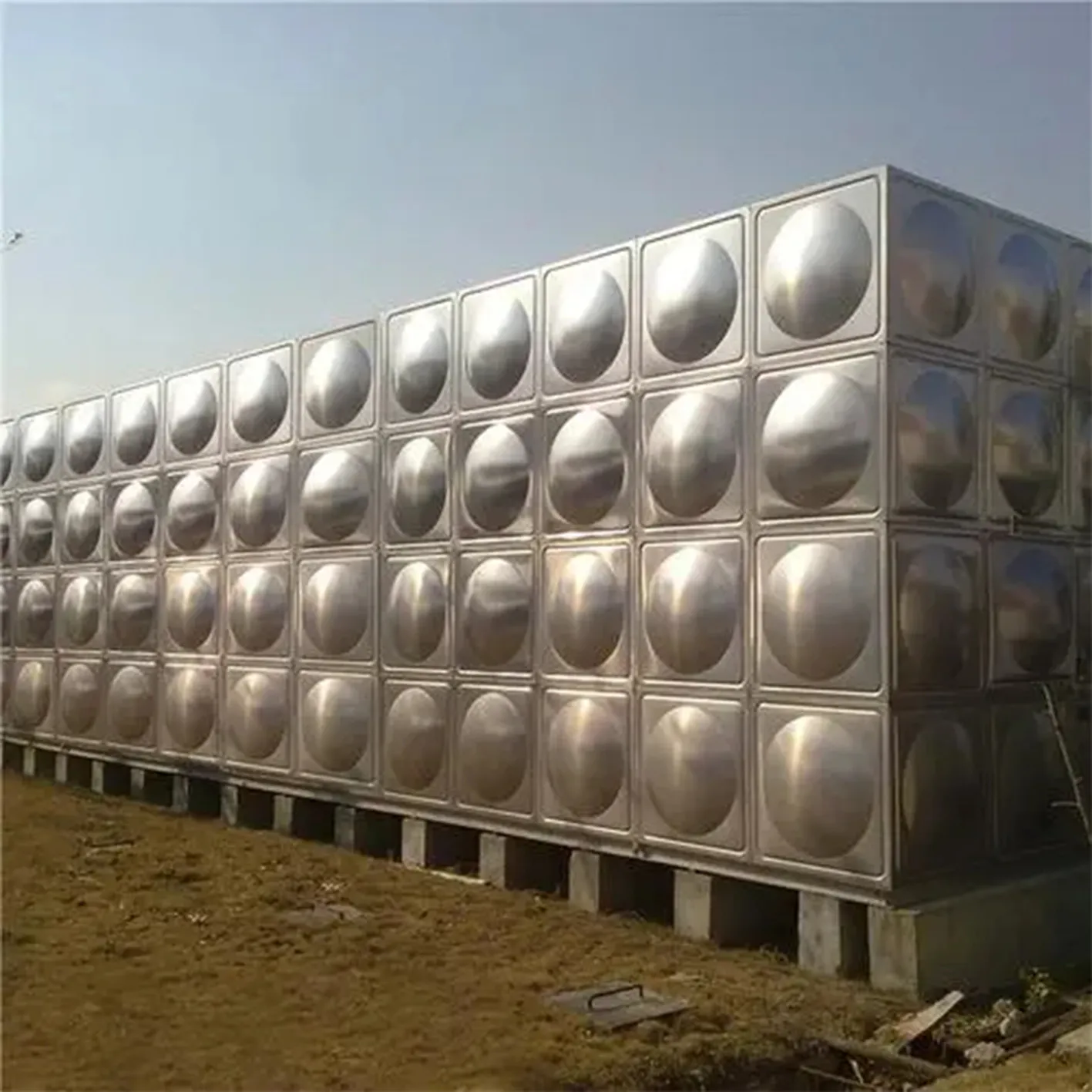
Stage 5: Quality Control and Testing. Every tank undergoes a comprehensive series of quality control checks. This includes visual inspection, dimensional checks, hydrostatic pressure testing to verify leak integrity, and, for critical applications, non-destructive testing (NDT) methods like dye penetrant inspection or radiographic inspection of welds. Water quality testing, where applicable, ensures that the tank does not leach contaminants. These tests conform to standards such as ISO 9001 for quality management systems and specific product standards like NSF/ANSI 61 for potable water components. The average lifespan of a well-maintained large square water tanks unit manufactured using these processes is typically 30-50 years, often exceeding that in less demanding environments, offering unparalleled long-term value and operational reliability. These meticulous steps ensure that our tanks are not just container111s, but robust, high-performance assets.
Diverse Application Scenarios and Technical Advantages
The versatility of large square water tanks makes them indispensable across a multitude of industries, each benefiting from their unique technical advantages. In the petrochemical sector, these tanks are vital for storing process water, cooling water, and various non-corrosive chemicals, where their robust construction and resistance to environmental stress are paramount. Their leak-proof design mitigates risks associated with hazardous substance containment, crucial for environmental and safety compliance. For metallurgy, stainless steel water tank rectangular designs are employed in cooling systems, quenching operations, and as reservoirs for pickling baths (with appropriate stainless steel grades like 316L), leveraging their high temperature tolerance and chemical resistance. The municipal water supply and drainage industry relies heavily on these tanks for potable water storage, raw water reservoirs, and wastewater equalization basins. Their non-reactive nature ensures water quality preservation, preventing the growth of algae and bacteria, and eliminating the need for periodic re-lining common with concrete or carbon steel tanks, which significantly reduces maintenance costs and operational downtime.
In the food and beverage industry, the Quality Assurance Food Grade Stainless Steel Water Tank for Storage Water is an essential component for storing ingredients like purified water, syrups, and other liquid food products. Their smooth, non-porous surfaces and compliance with FDA standards prevent microbial growth and cross-contamination, ensuring product integrity and consumer safety. The pharmaceutical industry similarly utilizes these tanks for WFI (Water for Injection) storage, purified water, and buffer solutions, where ultra-hygiene and validation are critical. Beyond these core sectors, large square water tanks find applications in agriculture for irrigation water storage, in fire protection systems for reserve water supply, and in commercial buildings for domestic water service. The inherent corrosion resistance of stainless steel significantly reduces the need for expensive cathodic protection systems or internal coatings, contributing to long-term cost savings. Furthermore, their reflective surface helps in temperature management, reducing heat gain and loss, which can contribute to energy efficiency, especially in large-scale thermal energy storage applications or where maintaining a specific water temperature is crucial, further demonstrating their comprehensive technical advantages.
Manufacturer Comparison and Tailored Customization Solutions
When selecting a provider for large square water tanks, discerning B2B decision-makers and technical personnel must look beyond mere pricing and consider several critical factors for a comprehensive manufacturer comparison. Key differentiators include the manufacturer's experience, evidenced by their portfolio of successfully completed projects and years in the industry; adherence to international quality certifications such as ISO 9001, which signifies a robust quality management system; and specific product certifications like NSF/ANSI 61 for potable water applications, or relevant ASME codes for pressure vessels. Material traceability is paramount: a reputable manufacturer will provide full material test reports (MTRs) for every stainless steel batch used, ensuring the specified grade and quality are consistently met. Furthermore, evaluate their design and engineering capabilities. Can they offer customized solutions that precisely match your unique volumetric, dimensional, and operational requirements? Do they utilize advanced CAD/CAM software for precision design and simulation, minimizing potential on-site issues? Our company excels in these areas, leveraging decades of expertise in fabricating stainless steel water tank rectangular configurations that meet the most exacting industrial specifications.
The ability to provide truly tailored customization solutions is where specialized manufacturers distinguish themselves. For large square water tanks, customization extends beyond basic dimensions. It encompasses specific nozzle placements and sizes, integration of internal structures like baffles or heating/cooling coils, inclusion of specialized access ports (manways), level indicators, or complex instrumentation mounts. For example, a client in the chemical industry might require specific coatings on the exterior for extreme weather conditions, or specialized internal finishes to prevent material adhesion for viscous liquids. Similarly, a pharmaceutical client might demand specific surface roughness values (e.g., Ra Quality Assurance Food Grade Stainless Steel Water Tank for Storage Water is not just a storage vessel but an integrated component of their operational success. This includes flexibility in construction types (fully welded, bolted panel, or hybrid), material grades (304, 316L, Duplex), insulation options, and external cladding for aesthetic or thermal performance. We provide comprehensive technical drawings and project management from initial concept to final installation, ensuring a seamless and precise delivery tailored to your operational landscape.
Ensuring Trustworthiness: FAQ, Delivery, and Warranty
Establishing trustworthiness is paramount in B2B transactions, particularly for mission-critical assets like large square water tanks. Our commitment to transparency and reliability is reflected in every aspect of our client engagement, from initial inquiry to post-installation support. We frequently encounter common questions from prospective clients. For instance, 'What is the expected lifespan of your stainless steel tanks?' Our tanks are engineered for a minimum service life of 30-50 years, often exceeding this with proper maintenance, significantly outperforming alternative materials. Another common query is, 'Are your tanks suitable for potable water?' Absolutely. Our Quality Assurance Food Grade Stainless Steel Water Tank for Storage Water products are compliant with NSF/ANSI 61 and FDA standards, ensuring the highest level of safety and purity for drinking water applications. Clients also inquire about maintenance: 'How often do these tanks require maintenance?' Stainless steel tanks require minimal maintenance compared to other materials. Routine visual inspections and periodic cleaning are usually sufficient, with no need for re-lining or cathodic protection, reducing operational overheads substantially. We believe that an informed client is a confident client, and our team is always ready to address any technical or logistical questions you may have, drawing upon our extensive experience in the field.
Frequently Asked Questions (FAQ)
-
Q: What specific stainless steel grades do you use for large square water tanks?
A: We primarily use AISI 304 and AISI 316L. The choice depends on the stored liquid's corrosivity, operating temperature, and environmental conditions, ensuring optimal performance and longevity. -
Q: How do you ensure the tanks are truly food-grade?
A: Our tanks are manufactured from certified food-grade stainless steel, with smooth, hygienic internal finishes (often polished to specific Ra values). They undergo strict cleaning, passivation, and comply with FDA regulations and NSF/ANSI 61 standards, preventing microbial growth and chemical leaching. -
Q: What is your typical delivery and installation process for large-scale projects?
A: For large projects, we offer modular panelized stainless steel water tank rectangular systems that are manufactured off-site, then shipped and assembled on-site by our certified technicians or supervised local teams. This approach minimizes on-site disruption and ensures efficient installation. Lead times vary by project scope but are always communicated transparently.
Our commitment to customer satisfaction extends to our comprehensive delivery protocols and robust warranty programs. Upon order confirmation, clients receive a detailed project timeline, outlining design, manufacturing, quality control, shipping, and estimated delivery dates. For larger large square water tanks, we facilitate organized logistics, ensuring secure transport to your site. Our dedicated customer support team provides real-time updates and addresses any logistical challenges promptly. Post-delivery, we offer optional installation supervision or full installation services performed by our experienced engineers, guaranteeing correct assembly and commissioning according to specifications. Every stainless steel water tank rectangular unit is backed by a comprehensive warranty, typically ranging from 10 to 25 years on material and workmanship, reflecting our confidence in the durability and quality of our products. This warranty provides peace of mind, assuring you of a reliable, long-term asset. Our after-sales support includes technical assistance, spare parts availability, and guidance on maintenance best practices, ensuring your investment continues to perform optimally for decades.
Concluding Insights: The Strategic Value of Advanced Water Storage
In summation, the strategic investment in high-quality large square water tanks, particularly those fabricated from food-grade stainless steel, represents a critical decision for any industrial or commercial enterprise. These tanks transcend mere storage; they are integral components of operational efficiency, regulatory compliance, and long-term sustainability. Their inherent properties—superior corrosion resistance, hygienic surfaces, structural robustness, and extended service life—collectively contribute to a significantly lower total cost of ownership compared to traditional alternatives. The ability to precisely tailor these tanks to specific volumetric, dimensional, and functional requirements ensures seamless integration into diverse process landscapes, from municipal water infrastructure to highly sensitive pharmaceutical manufacturing. The meticulous manufacturing processes, encompassing advanced material selection, precision fabrication, stringent quality control checks, and thorough surface treatments like passivation, underscore the commitment to delivering a product of unmatched reliability and safety. This unwavering dedication to engineering excellence ensures that each Quality Assurance Food Grade Stainless Steel Water Tank for Storage Water stands as a testament to durability and performance.
Choosing a reputable manufacturer with proven expertise in designing and producing stainless steel water tank rectangular solutions is not just about acquiring a product; it’s about securing a long-term partnership with a provider who understands your operational challenges and offers comprehensive support, from initial design consultation to post-installation service. The increasing global emphasis on water conservation, quality assurance, and environmental stewardship further accentuates the value proposition of these advanced storage solutions. As industries continue to evolve, demanding greater purity, security, and efficiency from their fluid management systems, the role of engineered stainless steel tanks will only grow in prominence. Investing in these robust assets is a proactive step towards future-proofing your operations, ensuring uninterrupted supply, safeguarding product integrity, and contributing positively to your environmental footprint. Our comprehensive offerings ensure that your investment in large square water tanks yields maximum returns, providing dependable and hygienic fluid storage for decades to come.
References
- ASTM International. (2020). Standard Specification for Stainless Steel Sheet, Strip, Plate, and Flat Bar. ASTM A240/A240M.
- American Water Works Association. (2013). AWWA D103: Standard for Factory-Coated Bolted Carbon Steel Water Tanks.
- NSF International. (2023). NSF/ANSI/CAN 61: Drinking Water System Components – Health Effects.
- European Committee for Standardization. (2004). Eurocode 3: Design of steel structures – Part 4-1: Silos, tanks and pipelines – Tanks. EN 1993-4-1.
- International Organization for Standardization. (2015). ISO 9001: Quality management systems – Requirements.
-
High Quality Fiberglass Rods for Electric Fence Insulation GuideNewsApr.16,2026
-
Benefits and Guide of Installing a White Fiberglass FenceNewsApr.09,2026
-
Choosing the Right Fibreglass Fence for Property Enhancement and LongevityNewsApr.07,2026
-
Comprehensive Guide to Durable Fiberglass Fence Rods and Their ApplicationsNewsMar.31,2026
-
Comprehensive Guide to Durable Fiberglass Fence Post Solutions for Various ApplicationsNewsMar.28,2026
-
Comprehensive Guide to Fiberglass Fencing Benefits and ApplicationsNewsMar.26,2026
-
Comprehensive Guide to Choosing the Right Safety Guard System for Industrial ProtectionNewsMar.24,2026