
loading...
- No. 9, Xingyuan South Street, Dongwaihuan Road, Zaoqiang County, Hengshui, Hebei, China
- admin@zjcomposites.com
- +86 15097380338
- Welcome to visit our website!

Mini Mesh Grating: Safe, Strong GRP/FRP Flooring Solutions
Introduction to Advanced mini mesh grating Solutions
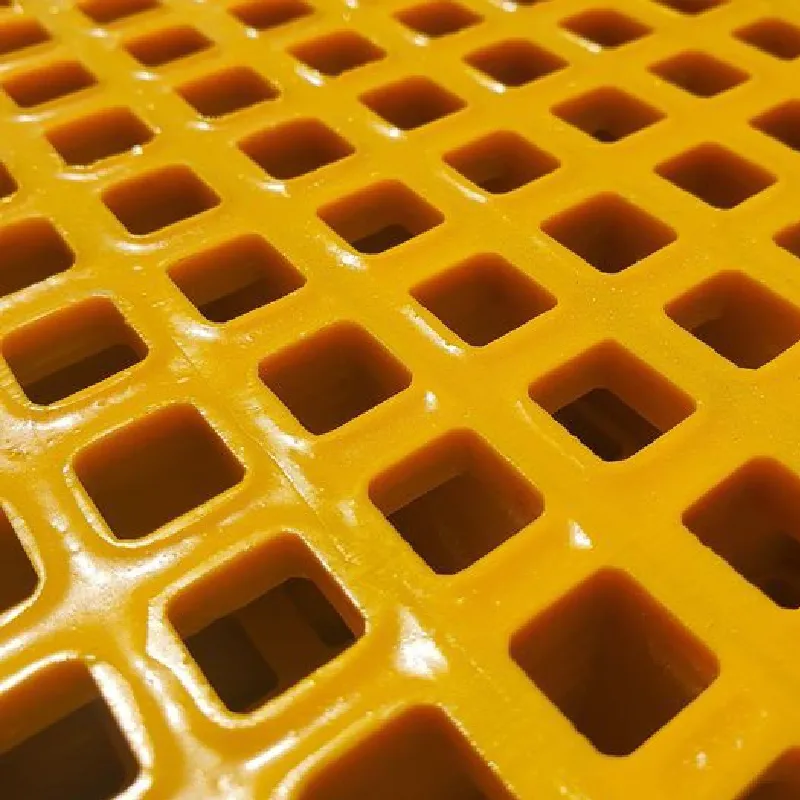
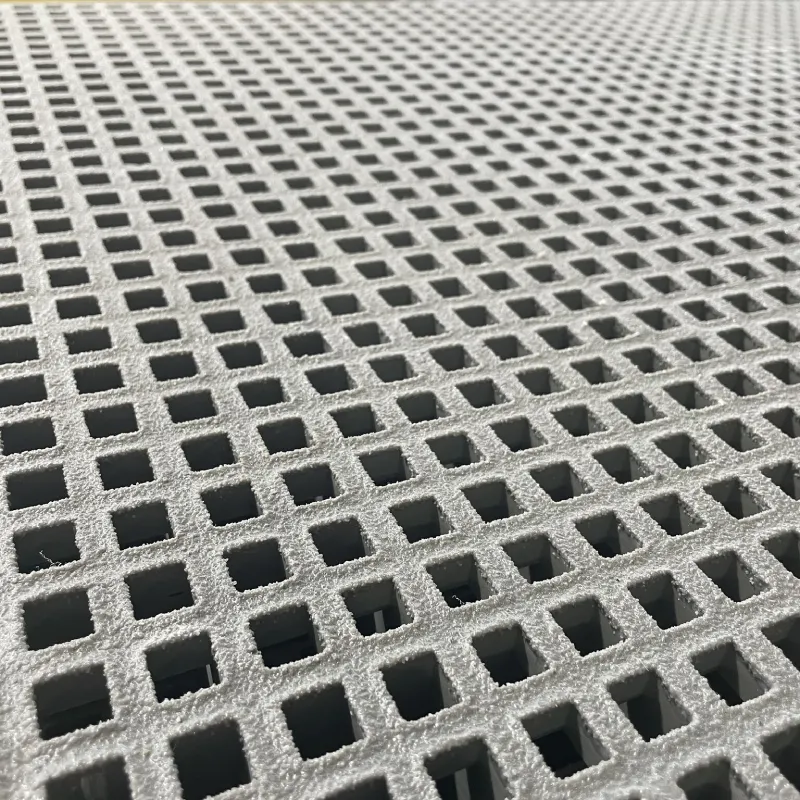
In demanding industrial environments where safety, durability, and corrosion resistance are paramount, the choice of flooring and structural materials significantly impacts operational efficiency and long-term cost of ownership. mini mesh grating, particularly in its FRP (Fiber Reinforced Polymer) and GRP (Glass Reinforced Plastic) variants, stands as a superior alternative to traditional metallic gratings. This advanced composite material offers an unparalleled combination of strength, chemical resistance, and non-conductive properties, making it indispensable across a spectrum of critical applications. The unique smaller open mesh area design of this product further enhances safety, preventing small tools or objects from falling through and offering increased foot contact area for improved ergonomics.
This comprehensive guide delves into the intricate world of FRP and GRP composite grating, exploring its manufacturing excellence, technical specifications, diverse application scenarios, and the profound advantages it brings to modern industrial infrastructure. We will also address key aspects such as vendor selection, customization potential, and real-world implementation case studies, ensuring a holistic understanding for B2B decision-makers and technical professionals.
The Advanced Manufacturing Process of Composite Grating
The production of high-performance composite grating is a meticulous process, primarily utilizing the pultrusion or molded grating techniques, with specific attention to material selection and quality control. This section details the steps involved, emphasizing the material integrity and precision engineering that define the final product.
Process Flow Overview:
- Material Selection & Preparation: The foundational materials for FRP/GRP grating are high-quality glass fibers (e.g., E-glass for standard applications, C-glass for enhanced corrosion resistance) and a thermosetting resin matrix. Common resins include Isophthalic Polyester (standard chemical resistance), Vinyl Ester (superior corrosion resistance for harsh chemicals), and Phenolic (excellent fire resistance, low smoke). Catalysts, pigments, and UV inhibitors are precisely measured and mixed to ensure optimal performance characteristics.
- Mold Preparation: For molded grating, a pre-heated, precision-machined mold is treated with a release agent to ensure easy demolding and a pristine surface finish. The mold design directly dictates the specific grating dimensions and open area.
- Resin & Fiber Saturation (Casting): Continuous glass fibers (rovings) and chopped strand mat are strategically placed into the mold cavities. The pre-mixed resin system is then poured or injected into the mold, fully saturating the glass fibers. This process ensures complete encapsulation, providing strength and corrosion resistance.
- Curing & Polymerization: The filled mold is subjected to controlled heat and pressure, initiating the exothermic polymerization process. The resin hardens, cross-linking with the glass fibers to form a monolithic, incredibly strong composite structure. Curing times and temperatures are critical for achieving optimal mechanical properties.
- Demolding & Post-Curing: Once cured, the FRP panel is carefully demolded. In some cases, a post-curing cycle may be applied to further enhance the material's structural integrity and chemical resistance.
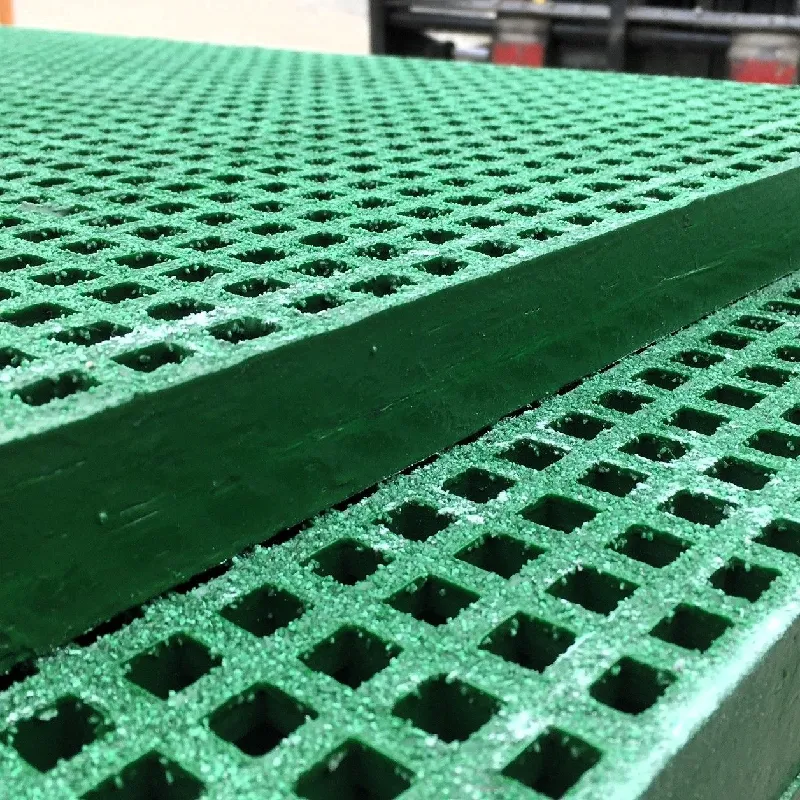
- Finishing & Surface Treatment: Edges are typically trimmed to exact dimensions. A common surface treatment involves applying a coarse, grit-top layer (often silica grit) to the top surface, providing superior slip resistance, crucial for safety in wet or oily environments.
- Quality Control & Testing: Each batch undergoes rigorous quality checks. This includes visual inspection for defects, dimensional accuracy checks, and mechanical testing.
Testing Standards & Service Life:
Adherence to international standards is paramount for ensuring the reliability and safety of FRP composite grating. Key testing standards include:
- ASTM E84: Surface Burning Characteristics (Flame Spread and Smoke Developed Index).
- ASTM D638 / D695 / D790: Tensile, Compressive, and Flexural Properties of Plastics.
- EN ISO 14125: Fiber-reinforced plastic composites - Determination of flexural properties.
- OSHA Standards: For workplace safety, particularly related to slip resistance and load bearing.
The service life of a properly specified and installed FRP grating can exceed 20-25 years, even in highly corrosive environments. This longevity far surpasses traditional materials like steel, especially where frequent maintenance or replacement due to corrosion would be necessary.
Industry Trends and Market Dynamics for FRP Composites
The global market for Fiber Reinforced Polymer (FRP) composites, including specialized products like mini mesh grating, is experiencing robust growth. Driven by increasing demand for lightweight, durable, and corrosion-resistant materials across diverse sectors, market analyses project significant expansion. According to reports, the global FRP composites market size was valued at USD 106.3 billion in 2022 and is expected to grow at a compound annual growth rate (CAGR) of 6.5% from 2023 to 2030, reaching an estimated USD 170 billion by 2030 (Grand View Research). This growth is particularly pronounced in infrastructure, chemical processing, and wastewater treatment industries, where the advantages of FRP materials are highly valued.
- Sustainability Focus: Manufacturers are increasingly adopting eco-friendly resins and production methods. The extended service life of FRP products also contributes to sustainability by reducing replacement frequency and associated resource consumption.
- Technological Advancements: Continuous innovation in resin chemistry and fiber reinforcement techniques leads to enhanced mechanical properties, fire ratings, and UV stability, broadening the application scope for FRP gratings.
- Digitalization in Design: Advanced CAD/CAM and Finite Element Analysis (FEA) tools are optimizing grating designs for specific load requirements and minimizing material usage, contributing to cost-effectiveness and performance.
- Safety Standards Evolution: Stricter safety regulations globally, particularly concerning slip hazards and electrical isolation, are driving the adoption of non-conductive and highly slip-resistant FRP grating.
Technical Specifications of Smaller Open Mesh Area FRP Mini Mesh Grating
The precise engineering of smaller open mesh area FRP grating is designed to provide enhanced safety, especially for personnel working at heights, while maintaining structural integrity. Below is a typical specification table for high-quality FRP composite grating.
Product Specification Table: Smaller Open Mesh Area FRP Mini Mesh Grating
| Parameter | Typical Value / Description | Standard Met |
|---|---|---|
| Material Composition | Isophthalic Polyester, Vinyl Ester, Phenolic Resin (as per application), E-Glass Reinforcement | ASTM D4067, EN ISO 10952 |
| Mesh Size (Approx.) | 19mm x 19mm, 25mm x 25mm (smaller open area options available, e.g., 12.7mm x 12.7mm) | Customizable |
| Panel Thickness | 25mm, 30mm, 38mm, 50mm (1", 1.25", 1.5", 2") | Manufacturer Specific |
| Panel Size (Standard) | 1220mm x 3660mm (4' x 12') or 1000mm x 3000mm | Customizable |
| Surface Finish | Concave, Grit Top (silica or aluminum oxide), Smooth | OSHA 1910.24 (Slip Resistance) |
| Weight Density | ~1.8 g/cm³ (approx. 1/4th of steel) | ASTM D792 |
| Flame Spread Index | 25 or less (Class 1 Fire Rating, for specific resin types like Phenolic) | ASTM E84 |
| Corrosion Resistance | Excellent resistance to a wide range of acids, alkalis, and solvents | ASTM C581 |
| Electrical Properties | Non-conductive | ASTM D149 (Dielectric Strength) |
These parameters underscore the versatility and robustness of FRP composite grating, allowing engineers to select the optimal configuration for specific operational demands and environmental challenges.
Strategic Application Scenarios & Technical Advantages of FRP Grating
The unique properties of FRP composite grating make it ideal for a vast array of critical applications where traditional materials fall short. Its inherent advantages translate directly into enhanced safety, reduced maintenance, and improved operational longevity.
Target Industries and Typical Use Cases:
- Petrochemical and Chemical Processing Plants: Ideal for catwalks, platforms, trench covers, and work areas exposed to corrosive chemicals (acids, alkalis, solvents). The non-conductive nature also mitigates electrical hazards. Advantages include superior corrosion resistance, reducing the need for frequent replacement, and enhanced safety due to slip resistance.
- Water & Wastewater Treatment Facilities: Used for access platforms, clarifier walkways, screening areas, and filter beds. Its resistance to rust and biological degradation ensures long service life in constantly wet and chemically aggressive environments. Energy saving is achieved through reduced pump load compared to heavier metallic structures.
- Offshore Platforms and Marine Applications: Saltwater environments are highly corrosive to steel. FRP grating provides a robust, lightweight, and corrosion-proof alternative for decks, gangways, and equipment platforms, significantly reducing maintenance costs and improving safety with its non-slip surface.
- Food & Beverage Processing: The hygienic, non-corrosive, and easy-to-clean nature of FRP makes it suitable for flooring, drainage covers, and wash-down areas, meeting stringent sanitation requirements.
- Power Generation & Electrical Substations: Its non-conductive properties are crucial in areas where electrical insulation is required, offering a safe working surface around high-voltage equipment.
- Metallurgy and Mining: Provides durable, corrosion-resistant flooring in areas exposed to harsh chemicals, heavy loads, and abrasive materials.
Key Technical Advantages:
- Unmatched Corrosion Resistance: Unlike steel, FRP will not rust, pit, or corrode when exposed to a wide range of chemicals, salt spray, or harsh weather, ensuring long-term structural integrity and minimal maintenance. This translates to significant cost savings over the product's lifespan.
- High Strength-to-Weight Ratio: FRP grating is significantly lighter than steel grating, reducing installation effort, freight costs, and the load on supporting structures, without compromising load-bearing capabilities.
- Superior Slip Resistance: Integrated grit surfaces provide excellent traction in wet, oily, or icy conditions, drastically reducing slip-and-fall incidents and improving workplace safety. The smaller mesh openings also offer more foot contact area compared to standard gratings.
- Electrical Non-Conductivity: A critical safety feature in environments with electrical hazards, eliminating the risk of electrical shock.
- Low Thermal Conductivity: Acts as an insulator, making it more comfortable to walk on in extreme temperatures compared to metal gratings.
- Impact Resistance: FRP has excellent elastic properties, allowing it to absorb impact without permanent deformation, unlike metal that can dent or bend.
- Long Service Life & Minimal Maintenance: The inherent durability and resistance to degradation mean FRP grating products require very little upkeep, reducing operational expenditures over decades.
Vendor Comparison and Selection Criteria for FRP Mini Mesh Grating
Selecting the right vendor for FRP composite grating is crucial for project success, long-term performance, and cost-effectiveness. A comprehensive evaluation should go beyond initial pricing and consider several key factors related to product quality, service, and vendor reliability.
Key Comparison Factors:
| Factor | Description / Importance |
|---|---|
| Material Quality & Resin System: | Verify the type of resin used (e.g., Isophthalic, Vinyl Ester, Phenolic) and its suitability for your chemical environment. Higher-quality resins offer superior corrosion and UV resistance. |
| Certifications & Standards: | Look for ISO 9001 certification for manufacturing quality, and product compliance with ASTM, EN, OSHA standards for performance and safety. Authoritative references like these ensure product reliability. |
| Manufacturing Experience & Reputation: | Years of service, client testimonials, and a portfolio of successful projects (case studies) demonstrate a vendor's experience and reliability. A reputable vendor offers proven solutions. |
| Customization Capabilities: | The ability to provide custom sizes, resin systems, colors, surface finishes, and fabrication services (e.g., cutting, notching, panel layout designs) is vital for complex projects. |
| Technical Support & Engineering: | Access to engineering expertise for load calculations, chemical resistance charts, and installation guidance ensures proper specification and application. |
| Lead Times & Logistics: | Reliable lead times and efficient global logistics are critical for project scheduling and minimizing downtime. |
| Warranty & After-Sales Service: | A clear warranty policy and responsive customer support are indicators of a vendor's confidence in their product and commitment to client satisfaction. |
Customized Solutions for FRP and GRP Mini Mesh Grating
Understanding that every industrial project presents unique challenges, leading manufacturers offer extensive customization options for FRP and GRP composite grating. This ensures that the grating perfectly integrates with specific operational requirements and environmental conditions.
- Resin System Tailoring: From Isophthalic Polyester for general industrial use, to Vinyl Ester for extreme chemical exposure, or Phenolic for enhanced fire and smoke protection (e.g., offshore or transit applications), the resin matrix can be selected to precisely match the chemical and thermal environment.
- Custom Dimensions and Fabrication: Gratings can be factory-cut to precise dimensions, eliminating on-site cutting and reducing waste. Complex shapes, cutouts for pipes or equipment, and integrated stair treads can be pre-fabricated.
- Color Customization: While standard colors like grey, yellow, and green are common, specific project requirements can be met with custom color matching, aiding in visual safety cues or corporate branding.
- Surface Finish Options: Beyond the standard grit-top for slip resistance, options include smooth surfaces for easy cleaning, or concave surfaces for lighter-duty pedestrian areas.
- Load-Bearing Optimization: Grating panel thickness and mesh configuration can be optimized based on anticipated point loads and distributed loads, ensuring structural integrity while potentially reducing material costs.
Application Case Studies & Customer Feedback
Real-world applications powerfully illustrate the benefits and reliability of FRP composite grating.
Case Study 1: Chemical Plant Walkways Upgrade
Client: Major Specialty Chemicals Manufacturer, Gulf Coast Region.
Challenge: Existing steel walkways and platforms in a hydrochloric acid processing unit were severely corroding, requiring constant repairs and posing safety risks. Frequent maintenance outages impacted production schedules.
Solution: Replaced all metallic grating with Vinyl Ester FRP mini mesh grating, specifically engineered for extreme acid resistance and enhanced slip resistance with a grit surface.
Results: After 5 years, the FRP grating shows no signs of corrosion or degradation, significantly extending the service life compared to the 1-2 year lifespan of the previous steel grating. Maintenance costs in this area were reduced by over 80%. Plant safety improved due to the non-slip surface and absence of corroded tripping hazards. Customer feedback highlighted the ease of installation and the immediate visual improvement in the facility's safety profile.
Case Study 2: Municipal Wastewater Treatment Plant
Client: Large Metropolitan Wastewater Authority.
Challenge: Walkways around aeration tanks and clarifiers were showing signs of fatigue and corrosion from continuous exposure to moisture, disinfectants, and biological agents. The wide openings of standard grating also posed a risk for small tools or debris falling into treatment tanks.
Solution: Installed Isophthalic Polyester FRP mini mesh grating with a 19mm x 19mm mesh size and integral grit surface. This smaller mesh design minimized the risk of falling objects while maintaining excellent drainage.
Results: The facility reported zero incidents related to grating failure or falling objects in the protected areas post-installation. The lightweight nature of the FRP allowed for quicker installation with less heavy machinery. The non-corrosive properties ensured a clean, safe appearance and performance despite continuous exposure to challenging conditions, leading to an estimated 25% reduction in long-term operational costs associated with grating maintenance.
Ensuring Trustworthiness: FAQ, Lead Time, Warranty, and Support for FRP Grating
Frequently Asked Questions (FAQ):
- Q: What is the primary advantage of FRP mini mesh grating over standard FRP grating?
- A: The primary advantage is the smaller open mesh area, which significantly reduces the risk of small tools, bolts, or other objects falling through. This enhances safety for personnel below and prevents loss or damage to equipment. It also offers a greater surface area for foot contact, improving comfort and reducing fatigue for workers.
- Q: Is FRP grating really stronger than steel?
- A: While steel has higher ultimate tensile strength, FRP grating excels in strength-to-weight ratio and has superior impact resistance. More importantly, its strength is maintained in corrosive environments where steel rapidly degrades. FRP's flexural strength is excellent, and it can be engineered for specific load requirements.
- Q: How do I choose the correct resin type for my application?
- A: Resin selection is critical. Isophthalic Polyester is suitable for general industrial use and mild corrosive environments. Vinyl Ester is recommended for highly aggressive chemical conditions, including concentrated acids and alkalis. Phenolic resins offer superior fire resistance and low smoke properties. Our technical team can provide detailed chemical resistance charts and recommendations based on your specific operational environment.
- Q: Can FRP grating be easily installed and cut on-site?
- A: Yes, FRP grating is significantly lighter than metal, making it easier and safer to handle and install. It can be cut on-site using standard power tools equipped with diamond or carbide-tipped blades, though dust control measures are recommended. We also offer factory pre-fabrication services to minimize on-site work.
Lead Time & Fulfillment Details:
Typical lead times for standard FRP composite grating panels range from 2-4 weeks, depending on order volume and current production schedules. Custom orders or specialized resin systems may require 4-6 weeks. We maintain robust supply chain logistics to ensure timely delivery to your project site globally. Expedited options are available upon request.
Warranty Commitments:
We stand by the quality of our FRP composite grating products. All products are covered by a standard 10-year limited warranty against manufacturing defects and material degradation under normal operating conditions. Extended warranties may be available for specific project types or applications. Please refer to our official warranty statement for full terms and conditions.
Customer Support Information:
Our dedicated team of technical sales and engineering professionals is available to assist you with product selection, technical specifications, custom solutions, and post-purchase support. For inquiries, please contact us via phone at [Insert Phone Number] or email at [Insert Email Address]. Our support hours are Monday to Friday, 9:00 AM to 5:00 PM (GMT+8).
Conclusion: The Future of Industrial Flooring
The adoption of advanced composite materials like FRP and GRP composite grating represents a significant leap forward in industrial infrastructure. Offering unparalleled durability, safety, and cost-efficiency in the most challenging environments, these gratings are not merely alternatives but superior solutions. By integrating cutting-edge manufacturing processes, adhering to stringent quality standards, and offering comprehensive customization and support, manufacturers are empowering industries to build safer, more sustainable, and more resilient facilities for the future.
References:
- Grand View Research. (2023). Fiber Reinforced Polymer (FRP) Composites Market Size, Share & Trends Analysis Report. Retrieved from https://www.grandviewresearch.com/industry-analysis/fiber-reinforced-polymer-frp-composites-market
- ASTM International. (2023). Standards for Composites. Retrieved from https://www.astm.org/products-services/standards/standards-by-industry/composites.html
- Occupational Safety and Health Administration (OSHA). (2023). Walking-Working Surfaces. Retrieved from https://www.osha.gov/walking-working-surfaces
- ISO. (2023). Standards for Plastics and Composites. Retrieved from https://www.iso.org/standards.html
-
High Quality Fiberglass Rods for Electric Fence Insulation GuideNewsApr.16,2026
-
Benefits and Guide of Installing a White Fiberglass FenceNewsApr.09,2026
-
Choosing the Right Fibreglass Fence for Property Enhancement and LongevityNewsApr.07,2026
-
Comprehensive Guide to Durable Fiberglass Fence Rods and Their ApplicationsNewsMar.31,2026
-
Comprehensive Guide to Durable Fiberglass Fence Post Solutions for Various ApplicationsNewsMar.28,2026
-
Comprehensive Guide to Fiberglass Fencing Benefits and ApplicationsNewsMar.26,2026
-
Comprehensive Guide to Choosing the Right Safety Guard System for Industrial ProtectionNewsMar.24,2026