loading...
When evaluating fluid storage solutions, the search for a competitive smc panel water tanks price often leads procurement managers to a critical crossroad: balancing initial capital expenditure against long-term operational reliability. In the sector of non-metallic mineral products, specifically fiberglass reinforced plastics, the shift toward modular panel systems reflects a growing demand for rapid deployment and corrosion resistance that traditional concrete or steel simply cannot match.
The financial viability of these systems is not merely about the sticker price per panel, but how they integrate into a broader infrastructure involving FRP grating, pultrusion profiles, and specialized pressure vessels. For industrial facilities, the choice between an SMC (Sheet Molding Compound) system and a stainless steel alternative depends heavily on the chemical nature of the stored medium and the environmental stressors of the installation site, making a detailed cost-benefit analysis essential.
Understanding the variables that influence smc panel water tanks price allows buyers to avoid the pitfalls of under-specification while optimizing their return on investment. This guide analyzes the technical drivers of cost, the performance metrics of composite materials, and the practical selection criteria required to secure a durable water storage system that minimizes lifecycle maintenance.


SMC, or Sheet Molding Compound, is a high-performance composite material consisting of thermosetting polyester resin reinforced with chopped glass fibers. Unlike monolithic tanks, these systems are engineered as modular panels that are bolted together on-site. This structural approach allows for the installation of large-capacity reservoirs in restricted spaces where traditional construction would be impossible, as panels can be transported through standard doorways and corridors.
The inherent strength of the composite matrix provides a high strength-to-weight ratio, reducing the need for extensive foundation reinforcement. When compared to stainless steel tanks, which rely on CNC stamping and welding, SMC panels offer a seamless surface that is naturally resistant to electrochemical corrosion and biological growth, ensuring that water quality is maintained without the need for frequent chemical linings or internal coatings.
The final cost of an SMC storage system is driven by several technical specifications. First, the grade of the resin used—specifically whether it is standard polyester or a specialized chemical-resistant vinyl ester—significantly alters the material cost. Higher resin grades are necessary for storing chemical solvents or treated water, which increases the price but extends the service life in aggressive environments.
The most critical pricing driver is the panel thickness relative to the tank height; hydrostatic pressure increases at the base of the reservoir, requiring thicker, reinforced panels for the bottom tiers to maintain structural integrity and prevent deformation under load.
Additionally, the complexity of the configuration—such as custom dimensions, the number of internal baffles, and the quality of the sealants used—contributes to the overall investment. While labor costs for installation are generally lower than for concrete tanks, the precision of the bolt-together assembly requires skilled technicians to ensure a leak-proof seal across all modular joints.
When comparing the lifecycle value of SMC panels against stainless steel (SUS304/316) or galvanized steel, the initial smc panel water tanks price may vary, but the total cost of ownership often favors composites in corrosive environments. Stainless steel offers excellent purity and high-pressure resistance but is susceptible to chloride-induced pitting and requires more complex welding certifications during assembly.
Composite systems eliminate the risk of rust and green moss accumulation, which are common failure points in metallic tanks. The lack of conductive properties also makes SMC tanks an ideal choice for areas where electrical grounding is a concern or where the tank is exposed to saline coastal air that would rapidly degrade galvanized coatings.
Modular SMC tanks are extensively deployed in commercial building water supply systems, where they serve as essential regulation reservoirs for living water and construction water. Their lightweight nature allows them to be installed on rooftops or in basements without overloading the building's structural frame, providing a safe and sanitary storage medium that meets national health inspection standards.
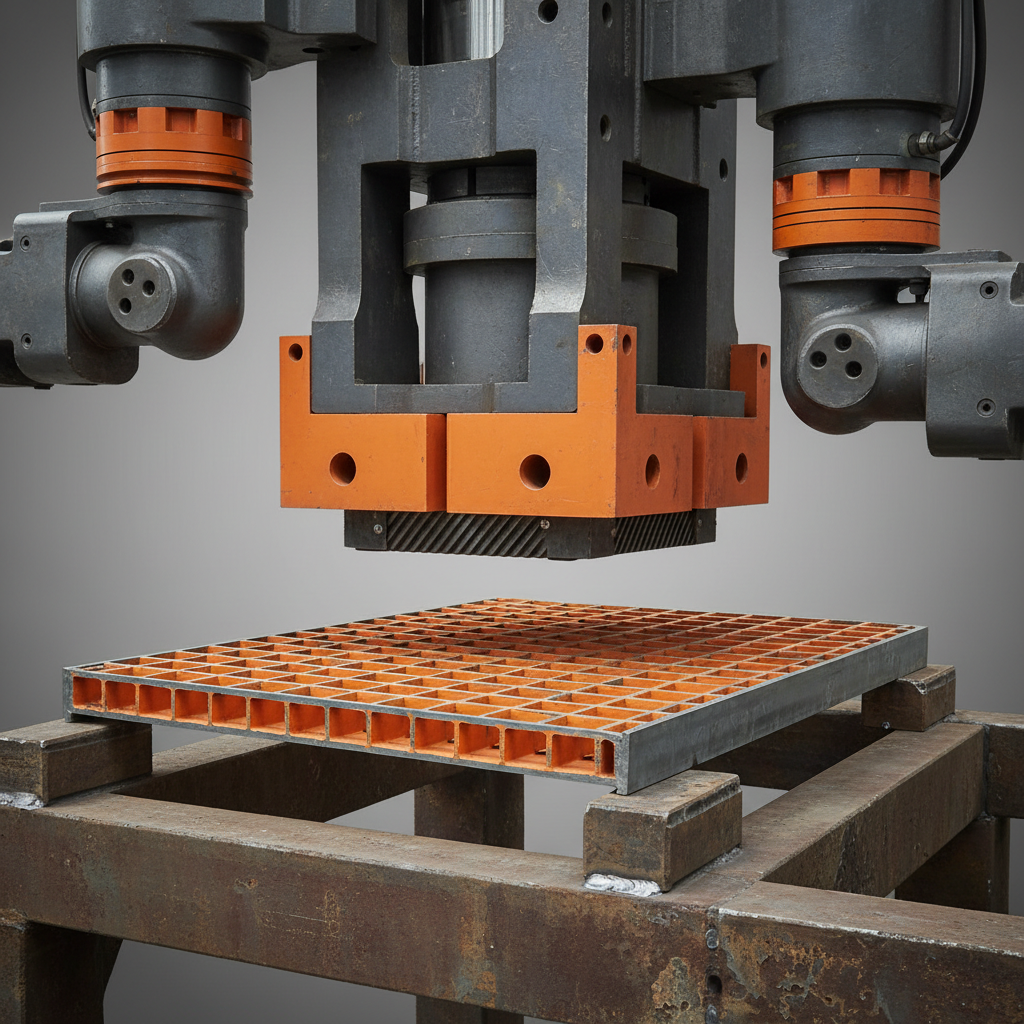
Beyond residential use, these tanks are critical in industrial settings for condensate storage, temporary water supply for geological surveys, and national defense projects. In chemical processing plants, they are often paired with FRP pultrusion profiles and FRP gratings to create a fully corrosion-resistant infrastructure, ensuring that the storage system remains stable even when handling aggressive chemical solvents.
The evolution of SMC technology is moving toward the integration of smart monitoring sensors embedded directly into the composite matrix. These sensors can detect micro-stress fractures or changes in water chemistry in real-time, allowing facility managers to perform predictive maintenance rather than reacting to leaks, thereby further reducing the long-term operational costs of the system.
Sustainability is also driving a shift toward bio-based resins and recycled glass fibers, reducing the carbon footprint of the manufacturing process. As environmental regulations tighten, the industry is likely to see a transition toward "closed-loop" composite tanks that can be disassembled and the material reclaimed at the end of the product's 20- to 30-year lifecycle.
Furthermore, the synergy between SMC panels and 3D-modeled custom fittings is allowing for more complex tank geometries. This enables the optimization of water flow and sediment control, reducing the frequency of manual cleaning and improving the overall efficiency of water purification and distribution networks.
One of the primary challenges in deploying modular tanks is ensuring the absolute flatness of the supporting base. Any deviation in the foundation can lead to uneven stress distribution across the panels, potentially compromising the seals. Professional installation involves a rigorous leveling process and the use of high-density support blocks to distribute the weight of the water evenly.
Another consideration is the integration of piping and inlets. Improperly installed nozzles can create stress concentrations in the panel. Utilizing reinforced flange plates and flexible connectors helps mitigate the risk of leaks caused by vibration or thermal expansion and contraction of the tank structure over time.
Finally, while SMC is highly durable, extreme UV exposure can lead to surface degradation over decades. Applying a UV-resistant gel coat or providing a covered enclosure ensures the structural integrity of the panels remains intact, preserving the aesthetic appearance and mechanical properties of the composite material.
| Feature | SMC Panel | Stainless Steel | Concrete |
|---|---|---|---|
| Corrosion Resistance | Excellent | High (Grade dep.) | Moderate |
| Installation Speed | Very Fast | Moderate | Slow |
| Weight Impact | Low | Moderate | Very High |
| Lifespan | 25+ Years | 20+ Years | 15-20 Years |
| Maintenance | Low | Moderate | High |
| Sanitation | High | Very High | Moderate |
The price is primarily determined by the total storage capacity, the thickness of the panels (which depends on the tank height), and the type of resin used for chemical resistance. Additionally, custom configurations, the number of required inlets/outlets, and the complexity of the installation site will impact the final quote.
SMC water tanks generally have a significantly longer useful life than concrete tanks, often estimated at 15 times the durability in terms of maintenance requirements. While concrete is prone to cracking and seepage over time, SMC panels are non-porous and resistant to the environmental degradation that typically affects cementitious structures.
Yes, SMC water tanks are designed to meet national health inspection standards. The materials used are non-toxic and prevent the growth of green moss and rust, ensuring that the water remains sanitary and free from secondary pollution, making them a perfect replacement for traditional steel or glass materials.
Absolutely. Because they are modular and assembled on-site, the individual panels can be transported through narrow hallways and elevators. This makes them the ideal choice for retrofitting existing commercial or industrial buildings where a pre-fabricated monolithic tank cannot be moved into position.
Stainless steel tanks offer superior strength for very high-pressure applications but are heavier and more expensive to install due to welding requirements. SMC tanks are lighter, completely corrosion-proof without needing specific grades like SUS316 for all applications, and offer faster deployment times for large volumes.
Yes, customization is a standard part of the service. ZJ Composites provides OEM and ODM services, allowing tanks to be tailored to specific dimensions and capacities. This includes adjusting panel configurations and adding specific accessories to meet the unique technical requirements of the client's project.
Selecting a water storage system requires a comprehensive understanding of how material properties translate into long-term financial value. While the initial smc panel water tanks price is a key consideration, the true value lies in the system's immunity to corrosion, its ease of installation in confined spaces, and the drastic reduction in maintenance compared to traditional materials. By focusing on resin quality and structural specifications, operators can ensure a reliable water supply that meets stringent health and safety standards.
For organizations seeking to optimize their fluid management infrastructure, ZJ Composites provides the technical expertise and premium innovation required to implement high-performance composite solutions. Whether you require standard modular tanks or complex custom engineering, we invite you to explore our full range of composite products at https://www.zjcomposites.com to find the optimal balance of durability and cost for your specific application.