loading...
loading...
In the current industrial landscape, procurement managers are increasingly scrutinizing the total cost of ownership for structural materials, leading to a significant rise in queries regarding frp channel price and its long-term viability. As corrosive environments in chemical processing and wastewater treatment demand materials that outlast traditional steel, Fiber Reinforced Polymer (FRP) pultrusion profiles have transitioned from niche alternatives to primary engineering specifications.
The complexity of pricing in the composites market stems from the volatility of raw resin costs and the specific engineering requirements of the end application. Unlike standardized metal beams, the value of an FRP channel is intrinsically linked to its glass content, resin type, and the structural loads it must sustain, making a simple price-per-foot comparison potentially misleading for project engineers.
This analysis examines the fundamental drivers of cost for FRP structural components, the technical trade-offs between different material grades, and how to evaluate procurement offers to ensure structural integrity. By understanding these variables, buyers can better optimize their budgets while maintaining strict safety standards for industrial infrastructure.


The pricing of pultruded FRP channels is primarily dictated by the ratio of reinforcement fibers to the polymer matrix. High-strength applications require a higher glass-to-resin ratio, which increases the material's modulus of elasticity but also adds to the production complexity.
Furthermore, the selection of resin—whether it be polyester, vinylester, or epoxy—creates a significant price variance. Vinylester resins, for instance, offer superior corrosion resistance and mechanical properties, which justifies a higher initial investment compared to standard orthophthalic polyesters.
When evaluating the frp channel price, engineers must look beyond the unit cost and analyze the specific technical requirements of the load-bearing structure. The wall thickness and the geometry of the channel directly influence its moment of inertia and overall stiffness, meaning that a "cheaper" profile may require more frequent support spans, thereby increasing the total installation cost.
Environmental factors also play a critical role. For instance, products designed for high-UV exposure or extreme chemical concentrations require specialized surface veils and additives. These enhancements ensure the longevity of the structural integrity but introduce additional costs into the manufacturing process.
It is essential to verify the certification of the profiles, such as fire ratings or load-bearing class certifications (e.g., B125 for certain grating and channel applications). A profile that lacks documented performance data represents a higher risk, which often outweighs the perceived savings of a lower price point.
One of the most common pitfalls in industrial procurement is the focus on the initial capital expenditure (CAPEX) rather than the operational expenditure (OPEX). While galvanized steel might offer a lower upfront cost than high-grade FRP, the maintenance cycles for steel in corrosive environments are significantly more frequent.
Moreover, the lightweight nature of composites reduces shipping costs and simplifies installation. Fewer heavy-lifting machines are required on-site, and installation time is often reduced by 30% to 50% compared to traditional metallic structural elements, providing immediate logistical savings.
To objectively compare different composite configurations, industry experts use normalized scoring based on key performance indicators. These metrics include strength-to-weight ratios, corrosion resistance levels, and installation efficiency.
The following assessment demonstrates how different resin and fiber configurations impact the overall utility of the product relative to its cost. Standard profiles serve general purposes, while specialized configurations target extreme industrial environments.
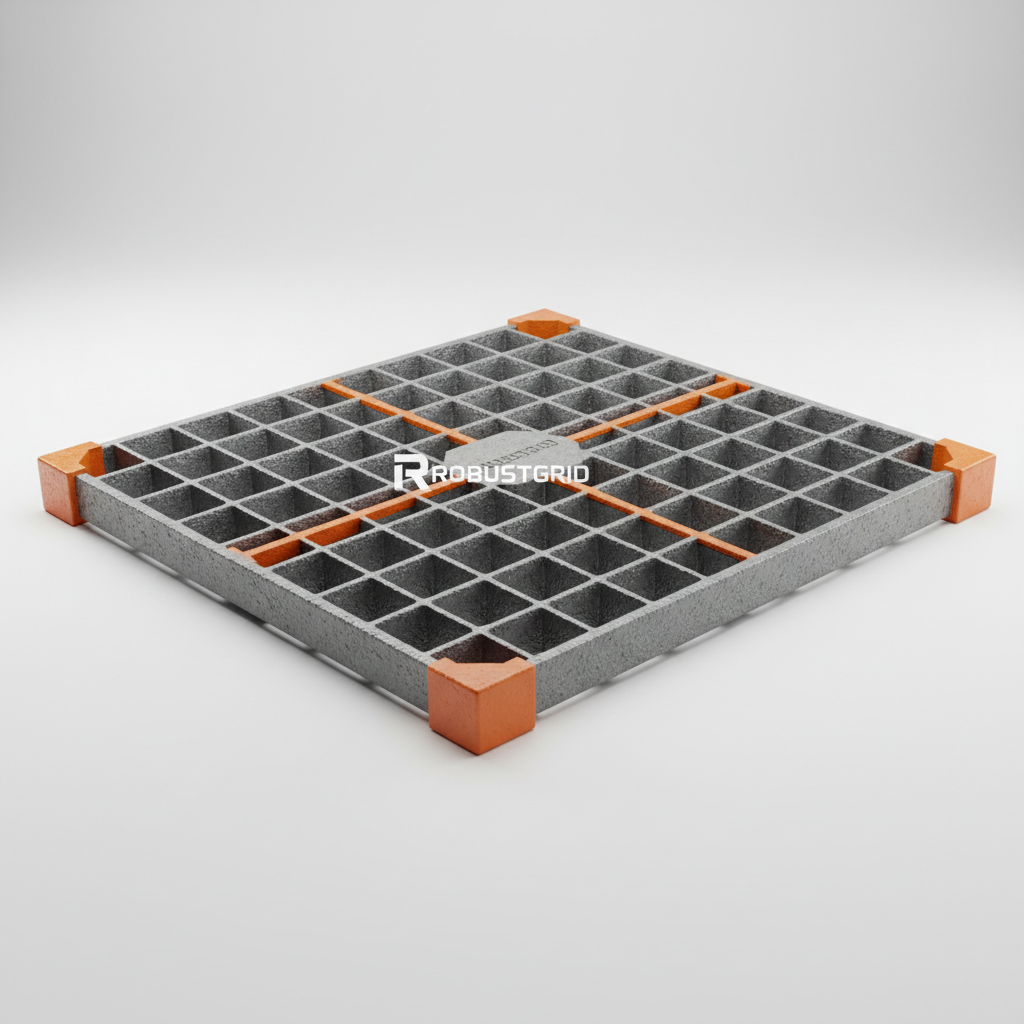
In the energy and utilities sector, FRP channels and gratings are frequently deployed for trench and trough cover applications. The requirement for high light transmittance and continuous airflow, combined with the need for high strength at narrow spans, makes composites the optimal choice for these specific engineering constraints.
Typical deployment includes wastewater treatment plants where sulfuric acid fumes would disintegrate steel within months. By utilizing Class B fire-rated profiles (BS EN 13501), facility managers can meet safety regulations while ensuring that the infrastructure remains maintenance-free for decades.
The industry is currently shifting toward the integration of hybrid reinforcements, combining traditional E-glass with carbon fibers to achieve higher stiffness without increasing the profile volume. This evolution is expected to redefine the frp channel price structure, as the performance gains per kilogram of material increase.
Additionally, the adoption of bio-based resins is becoming a priority for corporations aiming for net-zero carbon targets. While these resins are currently in the R&D phase for structural applications, their entry into the mass market will likely introduce new pricing tiers based on environmental sustainability ratings.
Automation in the pultrusion process is also reducing waste and improving dimensional tolerances. This increased precision allows for tighter integration with other structural components, reducing the need for oversized fasteners and complex on-site modifications.
When reviewing quotes for composite profiles, procurement teams should utilize a standardized matrix to compare options. Comparing a basic polyester profile to a high-duty vinylester profile on price alone is a technical error that can lead to premature structural failure.
The matrix should account for the expected service life, the severity of the chemical environment, and the frequency of maintenance interventions. A higher initial cost for a "High-Duty" configuration often translates to a 40% reduction in lifecycle costs.
Finally, the capability of the manufacturer to provide customized OEM/ODM services is a critical value-add. The ability to match specific colors or adjust wall thicknesses to meet exact load requirements can eliminate the need for secondary structural supports.
| Configuration Type | Resin System | Corrosion Rating | Recommended Use Case |
|---|---|---|---|
| Basic Profile | Orthophthalic | Moderate | Dry Indoor Storage |
| Standard Duty | Isophthalic | High | General Industrial Walkways |
| High-Duty | Vinylester | Very High | Chemical Processing Plants |
| Precision Grade | Specialized Epoxy | Extreme | Offshore Oil Platforms |
| Fire-Rated Spec | Phenolic/Special | High | Public Transit Tunnels |
| Industrial Baseline | Composite Mix | Moderate | Agricultural Infrastructure |
The price is primarily influenced by the resin type (Polyester vs. Vinylester vs. Epoxy), the glass fiber content, and the wall thickness. Specialized additives for UV protection, fire retardancy (e.g., Class B rating), and chemical resistance also add to the cost. Additionally, the order volume and the requirement for customized dimensions (OEM/ODM) can affect the final unit price.
Unlike galvanized steel, which relies on a zinc coating that eventually wears off, FRP is inherently corrosion-resistant throughout its entire cross-section. In environments containing chlorides or acids, FRP prevents structural degradation and eliminates the need for periodic painting or rust treatment, providing a significantly longer service life and lower operational costs.
For most industrial applications, a Class B fire rating according to BS EN 13501 is recommended. This ensures that the material does not contribute significantly to the spread of fire and maintains structural integrity for a defined period, which is critical for safety compliance in energy and utilities sectors.
Yes, customized services allow for the adjustment of wall thickness and fiber reinforcement levels to meet specific load-bearing requirements, such as Class B125 for narrow span applications. Manufacturers providing ODM services can engineer profiles to match exact structural calculations provided by the project engineer.
Most professional manufacturers offer a 1-year free warranty on manufacturing defects, accompanied by lifetime technical service support. However, the actual service life of the product in a corrosive environment often extends to 20+ years, provided the material grade is correctly matched to the chemical exposure level.
The ROI is calculated by comparing the Initial Cost (Material + Installation) plus the Cumulative Maintenance Cost over 10-20 years. For metal, this includes painting and replacement costs. For FRP, maintenance is nearly zero. When these are totaled, the "expensive" initial frp channel price usually results in a net saving of 30-60% over the asset lifecycle.
The evaluation of frp channel price must be shifted from a commodity-based purchase to a strategic engineering decision. The data indicates that while high-grade vinylester and carbon-hybrid profiles carry a premium, their ability to eliminate recurring maintenance costs and provide superior durability in harsh environments creates a clear economic advantage.
Ultimately, the most cost-effective solution is the one that matches the material specification exactly to the operating environment. Over-specifying leads to unnecessary waste, while under-specifying leads to premature failure. By focusing on lifecycle value and technical certification, industrial buyers can secure infrastructure that is both economically sustainable and structurally reliable.