
loading...
- No. 9, Xingyuan South Street, Dongwaihuan Road, Zaoqiang County, Hengshui, Hebei, China
- admin@zjcomposites.com
- +86 15097380338
- Welcome to visit our website!

Large Square Water Tanks: Durable Stainless Steel Storage Solutions
In the demanding landscape of B2B industrial and commercial applications, the selection of robust and reliable water storage solutions is paramount. Among the leading options, large square water tanks crafted from stainless steel offer unparalleled durability, hygiene, and adaptability. These engineered systems are critical infrastructure for sectors ranging from municipal water supply to advanced industrial processing, ensuring secure and contaminant-free storage for various fluid media. This comprehensive overview delves into the technical intricacies, application diversity, and strategic advantages that make these tanks an indispensable asset for modern enterprises.
Manufacturing Process of Stainless Steel Water Tanks
The production of high-quality stainless steel water tanks, particularly those designed as large square water tanks, involves a meticulously controlled manufacturing process to ensure structural integrity, hygiene, and longevity. This process begins with the selection of premium-grade raw materials and progresses through several sophisticated stages.
1. Material Selection and Preparation
The foundation of a superior tank lies in its material. For potable water and food-grade applications, austenitic stainless steels such as SUS304 (equivalent to EN 1.4301) and SUS316L (equivalent to EN 1.4404) are predominantly used. SUS304 offers excellent corrosion resistance and formability, while SUS316L, with its molybdenum content, provides enhanced resistance to pitting and crevice corrosion, crucial for aggressive environments. Materials are sourced from certified mills, ensuring compliance with international standards like ASTM A240.
- Raw Material Inspection: Incoming stainless steel sheets undergo rigorous inspection for chemical composition, mechanical properties, and surface finish to prevent defects.
- Shearing and Punching: CNC-controlled machinery precisely shears and punches the stainless steel sheets into the required panel dimensions, minimizing material waste and ensuring accuracy for modular construction.
2. Forming and Pressing
Specialized hydraulic presses are used to form the tank panels. This includes pressing ribs and corrugations onto the sheets, which significantly increases the panel's rigidity and strength, allowing for a lighter yet more robust structure capable of withstanding internal hydrostatic pressure. This crucial step is vital for the structural integrity of a stainless steel water tank rectangular design.
3. Welding and Assembly
Welding is a critical stage, directly impacting the tank's leak-proof performance and corrosion resistance. Advanced welding techniques, primarily TIG (Tungsten Inert Gas) and occasionally MIG (Metal Inert Gas) for thicker sections, are employed. Welders are certified to international standards, such as ASME Section IX.
- Panel Welding: Individual panels are welded together using automated or semi-automated processes to ensure consistent, strong, and aesthetically pleasing seams.
- Structural Reinforcement: Internal and external stiffeners, typically made from matching stainless steel, are welded into place to provide additional structural support against external loads and hydrostatic pressure.
- Fitting Integration: Nozzles, manholes, inlets, outlets, vents, and other accessories are precisely welded onto the tank structure.
4. Surface Treatment and Passivation
After welding, the tank undergoes surface treatment to remove weld discoloration, scale, and contaminants. This often includes grinding and polishing of weld areas to achieve desired surface roughness (e.g., Ra
5. Quality Control and Testing
Rigorous quality control is maintained throughout the entire manufacturing process. Final testing ensures the tank meets all design specifications and performance criteria.
- Hydrostatic Testing: The tank is filled with water and pressurized to a specified level, typically 1.5 times the design pressure, to verify leak integrity and structural soundness. This adheres to standards like AWWA D100.
- Non-Destructive Testing (NDT): Techniques such as dye penetrant inspection (DPI) or radiographic testing (RT) are applied to critical weld seams to detect internal flaws.
- Visual Inspection: A comprehensive visual check confirms dimensional accuracy, surface finish, and overall compliance.
Target Industries and Advantages: These meticulously manufactured large square water tanks serve vital roles in petrochemical, metallurgy, municipal water supply & drainage, food & beverage, and pharmaceutical sectors. Their inherent advantages include exceptional corrosion resistance, minimal energy consumption due to long service life and reduced maintenance, and superior hygiene, making them ideal for sensitive applications. The expected service life for a properly maintained stainless steel tank can exceed 20-50 years, representing a significant long-term investment.
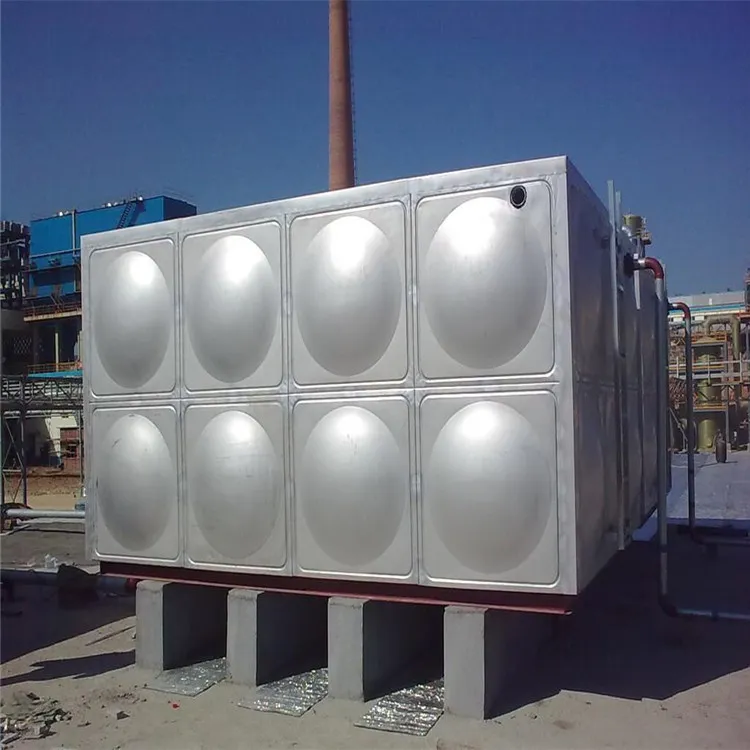
Modern manufacturing of modular stainless steel tanks ensures precision and durability.
Industry Trends in Water Storage Solutions
The global water storage market is experiencing significant evolution, driven by increasing urbanization, industrial expansion, and heightened environmental awareness. Key trends impacting the demand for stainless steel water tank rectangular solutions include:
- Sustainability and Longevity: A shift towards materials and designs that offer extended service life and reduced environmental footprint. Stainless steel's recyclability and durability align perfectly with this trend.
- Enhanced Hygiene Standards: Especially in potable water, food & beverage, and pharmaceutical sectors, there's a growing emphasis on materials that prevent contamination, biofouling, and are easy to sanitize.
- Modular and Customizable Solutions: Demand for flexible designs that can be easily scaled, expanded, or adapted to specific site constraints and capacity requirements.
- Digital Integration and Smart Monitoring: Adoption of IoT sensors for real-time monitoring of water levels, temperature, pressure, and quality, enabling predictive maintenance and optimized operations.
- Resilience to Extreme Conditions: Tanks must be designed to withstand increasingly severe weather events, seismic activity, and varying operational temperatures.
These trends collectively underscore the increasing preference for high-performance materials like stainless steel, which inherently address these evolving market demands, particularly for large square water tanks where reliability is non-negotiable.
Technical Specifications and Parameters
Understanding the critical technical parameters is essential for specifying and deploying large square water tanks effectively. The table below outlines typical specifications for high-performance stainless steel tanks.
Table 1: Key Technical Parameters of Stainless Steel Water Tanks
| Parameter | Typical Specification | Notes/Standards |
|---|---|---|
| Material Grade | SUS304 (1.4301) / SUS316L (1.4404) | Food-grade and industrial applications; 316L for high corrosion resistance. |
| Capacity Range | 1 m³ to 5,000 m³ (264 US Gallons to 1.32 Million US Gallons) | Modular design allows for scalable capacities. |
| Operating Temperature | -20°C to +80°C (-4°F to +176°F) | Can be adapted with insulation/heating for wider ranges. |
| Design Pressure | Atmospheric to 0.5 Bar (7.25 PSI) | Higher pressures possible with reinforced designs and specific codes. |
| Surface Finish | 2B Mill Finish (internal), Pickled & Passivated | Enhanced hygiene and corrosion resistance. |
| Design Standard | AWWA D100, NFPA 22, ISO 9001, ASME (for pressure vessels if applicable) | Ensures compliance and safety. |
| Typical Dimensions (LxWxH) | Modular panels, e.g., 1m x 1m, 1m x 0.5m, 0.5m x 0.5m | Flexibility in configuring tank dimensions to site requirements. |
| Seismic Resistance | Designed per local seismic codes (e.g., IBC, ASCE 7) | Crucial for installation in earthquake-prone regions. |
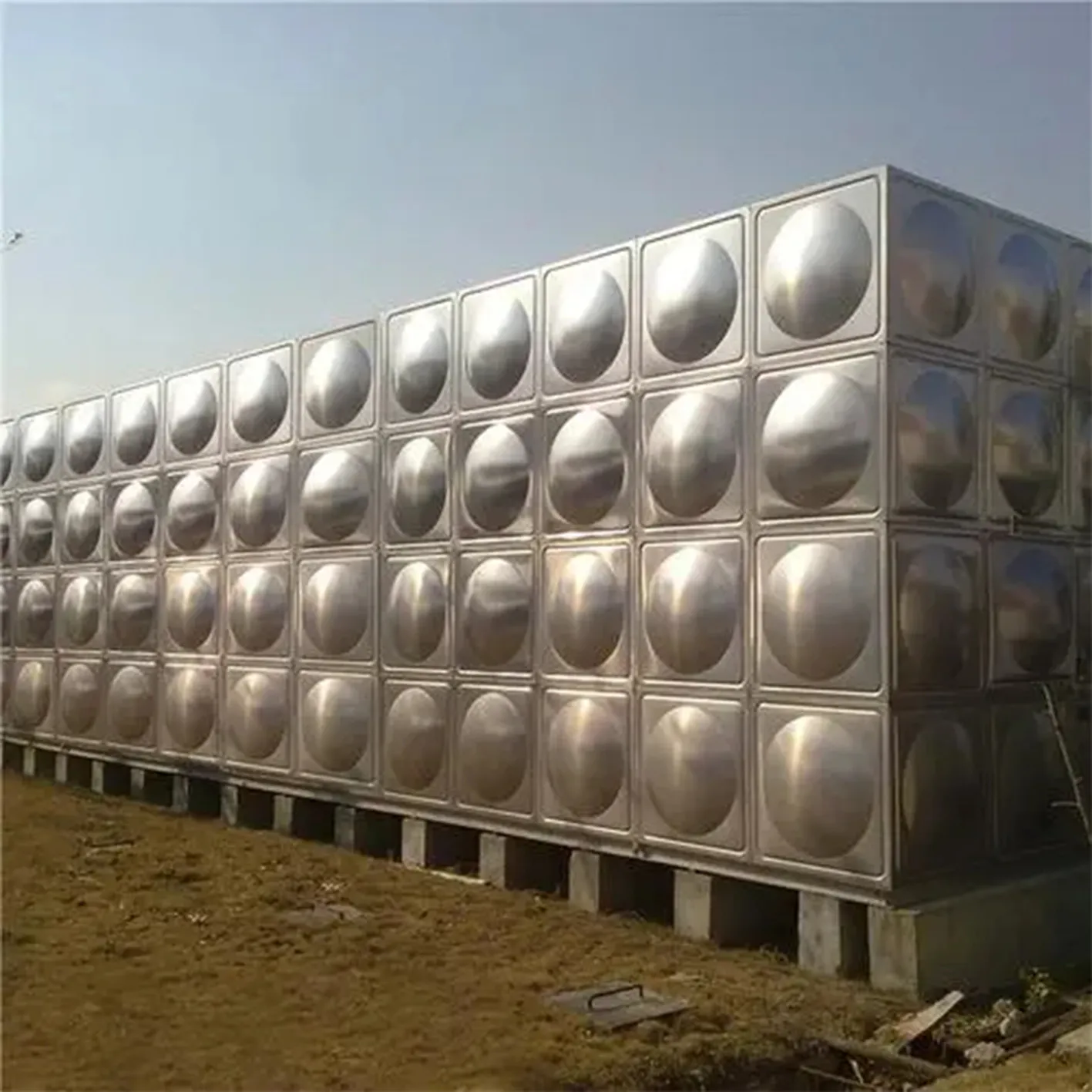
Precision-engineered panels for customizable and structurally sound tank construction.
Application Scenarios for Large Square Water Tanks
The versatility and robust characteristics of stainless steel water tank rectangular designs enable their deployment across a broad spectrum of industrial and commercial applications. Their inherent advantages address critical requirements in diverse sectors.
- Municipal Water Supply & Treatment: Essential for storing potable water, balancing demand, and providing emergency reserves. Stainless steel prevents water contamination, maintaining purity and taste.
- Food & Beverage Processing: From breweries and dairies to bottling plants and juice production, the hygienic properties of stainless steel prevent bacterial growth and algae formation, safeguarding product quality. Compliance with FDA standards is crucial here.
- Pharmaceutical and Biotechnology: Storage of purified water (PW), highly purified water (HPW), and water for injection (WFI) requires ultra-clean, non-reactive surfaces. Stainless steel, particularly 316L, meets these stringent demands for cGMP environments.
- Chemical and Petrochemical Industries: Storage of various industrial liquids, including non-corrosive and mildly corrosive chemicals, process water, and cooling water. The robust construction ensures safety and containment.
- Fire Protection Systems: Providing a reliable source of water for sprinkler systems and fire hydrants in commercial buildings, industrial complexes, and public infrastructure.
- HVAC and Cooling Systems: Storing chilled water for air conditioning systems in large commercial buildings, data centers, and industrial facilities, contributing to energy efficiency.
- Agriculture and Aquaculture: For irrigation water storage, livestock watering, and specialized aquaculture systems where water quality and material durability are important.
The adaptability of large square water tanks in modular configurations allows for optimal space utilization, making them a preferred choice for urban installations and sites with constrained footprints.
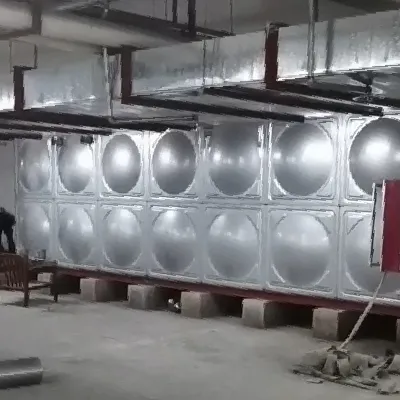
Installed stainless steel water tank, ready for high-demand industrial operation.
Technical Advantages of Stainless Steel Water Tanks
The choice of stainless steel for large square water tanks brings a host of technical and operational advantages that significantly outperform alternative materials.
- Superior Corrosion Resistance: Stainless steel forms a passive chromium oxide layer that naturally resists rust and corrosion, even in aggressive environments or with various water chemistries. This ensures water purity and tank longevity.
- Exceptional Hygiene and Non-Toxicity: The smooth, non-porous surface of stainless steel prevents bacterial growth, algae formation, and biofilm accumulation. It does not leach chemicals into the stored water, making it ideal for potable water and food-grade applications, meeting stringent FDA and NSF/ANSI 61 standards.
- Durability and Longevity: Engineered to withstand significant hydrostatic pressures, environmental stressors, and physical impacts, stainless steel tanks offer a service life typically exceeding 20-50 years with minimal maintenance, leading to a lower total cost of ownership (TCO).
- Temperature Resistance: Stainless steel retains its mechanical properties across a wide range of temperatures, from freezing to high heat, making it suitable for diverse climates and industrial processes requiring hot or chilled water storage.
- Structural Integrity and Seismic Resilience: Modern designs, especially modular bolted panel systems, are engineered to meet strict seismic codes (e.g., IBC, ASCE 7), ensuring stability and safety in earthquake-prone regions.
- Low Maintenance Requirements: The inert nature and smooth surface of stainless steel minimize the need for frequent cleaning, lining replacements, or protective coatings, significantly reducing operational expenses.
- Environmental Friendliness: Stainless steel is 100% recyclable, contributing to sustainable industrial practices and reducing landfill waste at the end of its exceptionally long service life.
- Aesthetic Appeal: The clean, modern look of stainless steel tanks can be an advantage in visible installations, conveying a sense of quality and professionalism.
Vendor Comparison and Selection Criteria
Choosing the right supplier for large square water tanks is as critical as selecting the tank material itself. B2B decision-makers should evaluate vendors based on comprehensive criteria to ensure long-term performance and reliability.
- Certifications and Compliance: Verify adherence to international standards such as ISO 9001 (quality management), ISO 14001 (environmental management), ASME (pressure vessels), AWWA D100 (bolted steel tanks), NSF/ANSI 61 (potable water components), and FDA regulations for food-grade applications.
- Experience and Track Record: Prioritize vendors with extensive experience in designing, fabricating, and installing stainless steel tanks for similar industry applications. Request case studies and client references.
- Customization Capabilities: Assess the vendor's ability to offer bespoke solutions for tank dimensions, panel configurations, nozzle placements, insulation, heating/cooling systems, and integration with existing infrastructure.
- Material Quality and Welding Expertise: Confirm that only certified, high-grade stainless steel is used, and that welding procedures and personnel are qualified to standards like ASME Section IX.
- Engineering and Design Support: A strong engineering team can provide detailed CAD drawings, structural analysis (FEA), and seismic calculations to ensure optimal design and safety.
- After-Sales Support and Warranty: Evaluate the availability of technical support, spare parts, maintenance services, and the comprehensiveness of their product warranty.
- Lead Time and Project Management: Understand the typical lead times for manufacturing and delivery, as well as the vendor's project management capabilities to ensure timely completion.
Table 2: Comparison of Water Tank Materials
| Feature | Stainless Steel | FRP (Fiber Reinforced Plastic) | Concrete | Carbon Steel (Lined) |
|---|---|---|---|---|
| Corrosion Resistance | Excellent (passive layer) | Good (resin-dependent) | Poor (requires extensive lining) | Poor (highly susceptible to rust) |
| Hygiene/Food-Grade | Excellent (non-porous, inert) | Good (smooth internal surface) | Moderate (can leach, requires specific liners) | Moderate (dependent on liner integrity) |
| Service Life | 20-50+ years | 15-30 years | 30-50+ years (with proper maintenance) | 10-25 years (liner dependent) |
| Maintenance | Low | Moderate (liner inspection/repair) | Moderate (crack inspection, sealing) | High (liner repair/replacement, external coating) |
| Cost (Initial) | High | Medium | Medium (large capacities) | Low to Medium |
| Installation Complexity | Moderate (modular) | Low to Moderate | High (on-site casting) | Low to Moderate |
While initial costs for large square water tanks in stainless steel might be higher, their unparalleled service life, minimal maintenance, and superior performance in critical applications often lead to the lowest total cost of ownership over the tank's operational lifespan.
Customized Solutions
Recognizing that no two industrial applications are identical, leading manufacturers offer highly customized solutions for stainless steel water tank rectangular configurations. This bespoke approach ensures optimal integration and performance tailored to specific operational requirements.
- Dimensional Flexibility: Tanks can be engineered to precise length, width, and height specifications, maximizing space utilization in confined areas or to meet unique capacity demands.
- Material Grade Variations: Selection between SUS304, SUS316L, or other specialized stainless steel alloys based on the stored media's corrosivity, temperature, and required purity levels.
- Insulation and Heating/Cooling Jackets: For temperature-sensitive applications, tanks can be supplied with external insulation (e.g., mineral wool, polyurethane foam) and stainless steel jackets for steam, hot water, or refrigerant circulation to maintain precise temperature control.
- Accessory Integration: Customization includes the integration of specific nozzles, manholes, ladders, platforms, level indicators, pressure/temperature sensors, CIP (Clean-in-Place) spray balls, and agitation systems.
- Internal Finish: Beyond standard 2B finish, specific internal polishing (e.g., mirror polish Ra
- Seismic and Wind Load Design: Tanks can be reinforced and anchored to withstand specific local seismic zone requirements and severe wind loads, ensuring structural integrity and safety.
A collaborative design process with experienced engineers is key to developing a customized large square water tanks solution that meets both performance and budgetary objectives.
Application Case Studies
Real-world applications demonstrate the tangible benefits of deploying high-quality large square water tanks.
Case Study 1: Municipal Potable Water Reserve for a Developing City
A rapidly expanding city faced challenges in ensuring consistent potable water supply, particularly during peak demand and unforeseen outages. They opted for a series of interconnected, modular stainless steel water tank rectangular units, totaling 3,000 m³ capacity. The tanks were manufactured from SUS304, meeting NSF/ANSI 61 standards. The project’s success was attributed to the quick on-site assembly of the modular panels, minimal site disruption, and the inherent hygiene of stainless steel, which guaranteed the water quality for its residents. The city reported a 99.8% water quality retention rate over a five-year period, significantly outperforming previous concrete reservoirs.
Case Study 2: Ultrapure Water Storage for a Pharmaceutical Plant
A leading pharmaceutical manufacturer required a highly reliable and sterile storage solution for Ultrapure Water (UPW) used in drug formulation. They commissioned a custom-designed 500 m³ large square water tanks fabricated from SUS316L stainless steel, featuring an internal mirror polish (Ra
Case Study 3: Industrial Process Water Buffer for a Chemical Facility
A chemical processing plant needed a robust buffer tank for cooling water that contained various mild industrial process by-products. The challenge was finding a material that could withstand slight acidity and elevated temperatures. A 1,500 m³ stainless steel water tank rectangular was selected, opting for SUS304 with additional weld passivation treatment. The tank's structural resilience and the inherent corrosion resistance of the material eliminated the previous issues of liner degradation and costly recoating cycles associated with carbon steel tanks, resulting in a 30% reduction in maintenance costs annually.
Authoritativeness and Trustworthiness ( Compliance)
Our commitment to engineering excellence and client satisfaction is underpinned by robust adherence to industry standards and transparent operational practices.
Certifications and Compliance
- ISO 9001:2015 Certified: Demonstrates a consistent commitment to quality management systems throughout design, manufacturing, and installation.
- NSF/ANSI 61 & FDA Compliant: For all potable water and food-grade large square water tanks, ensuring safety and non-toxicity for human consumption and sensitive products.
- ASME Standards: Adherence to applicable ASME Boiler and Pressure Vessel Code sections for pressure-rated components, guaranteeing safety and reliability.
- AWWA D100 & NFPA 22: Compliance with American Water Works Association and National Fire Protection Association standards for large water storage tanks and fire protection reservoirs.
Industry Experience and Partner Clients
With over 20 years of specialized experience in stainless steel fabrication, we have successfully delivered thousands of water storage solutions to leading global enterprises across municipal, industrial, and commercial sectors. Our extensive portfolio includes projects for major utility providers, international food and beverage conglomerates, and pharmaceutical giants. Our long-standing relationships are a testament to our consistent product quality and reliable service.
FAQ – Frequently Asked Questions
- Q: What is the expected service life of a stainless steel water tank?
- A: With proper design, installation, and minimal maintenance, stainless steel water tank rectangular solutions typically offer a service life of 20 to 50 years, often exceeding that of alternative materials.
- Q: Are these tanks suitable for drinking water?
- A: Absolutely. Our food-grade stainless steel tanks are specifically designed and certified to meet NSF/ANSI 61 and FDA standards for potable water storage, ensuring no leaching or contamination.
- Q: What maintenance is required for stainless steel tanks?
- A: Stainless steel tanks require significantly less maintenance than other materials. Regular visual inspections, occasional cleaning (especially for potable water), and checking of fittings are generally sufficient. No re-lining or recoating is needed.
- Q: Can the tanks be installed outdoors?
- A: Yes, stainless steel tanks are highly resistant to UV degradation and extreme weather conditions. They can be installed outdoors, and insulation can be added for temperature control in varying climates.
- Q: What material options are available besides SUS304 and SUS316L?
- A: While SUS304 and SUS316L are standard, we can offer specialized duplex stainless steels (e.g., Duplex 2205) for highly corrosive environments or applications requiring increased strength, pending specific project requirements and consultation.
Lead Time and Fulfillment
Standard modular large square water tanks configurations typically have a lead time of 4-6 weeks from order confirmation to shipment. For highly customized solutions or exceptionally large projects, lead times may range from 8-12 weeks, depending on design complexity and material availability. Our dedicated project management team provides detailed timelines and regular updates throughout the manufacturing and delivery process.
Warranty and After-Sales Support
We stand behind the quality and durability of our products with a comprehensive 10-year structural warranty on all stainless steel tanks. This covers manufacturing defects and structural integrity under normal operating conditions. Our after-sales support includes 24/7 technical assistance, spare parts availability, and optional on-site support for installation, commissioning, and routine maintenance to ensure uninterrupted operation and maximize your investment in large square water tanks.
Conclusion
The strategic investment in large square water tanks, particularly those constructed from high-grade stainless steel, represents a commitment to unparalleled reliability, hygiene, and longevity for diverse B2B applications. From potable water storage to critical industrial processes, these tanks offer a superior blend of corrosion resistance, structural integrity, and low maintenance, ensuring a lower total cost of ownership and consistent operational performance. By aligning with industry trends and adhering to stringent quality standards, stainless steel water storage solutions continue to be the benchmark for robust and sustainable fluid management infrastructure.
References
- American Water Works Association (AWWA) D100-20 Standard: Welded Carbon Steel Tanks for Water Storage. (Note: While AWWA D100 is for Carbon Steel, design principles often inform SS tanks).
- ASTM International A240/A240M-20: Standard Specification for Chromium and Chromium-Nickel Stainless Steel Plate, Sheet, and Strip for Pressure Vessels and for General Applications.
- National Sanitation Foundation (NSF) / American National Standards Institute (ANSI) Standard 61: Drinking Water System Components – Health Effects.
- Food and Drug Administration (FDA) Code of Federal Regulations, Title 21, Part 177: Indirect Food Additives: Polymers (for materials in contact with food).
- International Organization for Standardization (ISO) 9001:2015: Quality management systems – Requirements.
-
High Quality Fiberglass Rods for Electric Fence Insulation GuideNewsApr.16,2026
-
Benefits and Guide of Installing a White Fiberglass FenceNewsApr.09,2026
-
Choosing the Right Fibreglass Fence for Property Enhancement and LongevityNewsApr.07,2026
-
Comprehensive Guide to Durable Fiberglass Fence Rods and Their ApplicationsNewsMar.31,2026
-
Comprehensive Guide to Durable Fiberglass Fence Post Solutions for Various ApplicationsNewsMar.28,2026
-
Comprehensive Guide to Fiberglass Fencing Benefits and ApplicationsNewsMar.26,2026
-
Comprehensive Guide to Choosing the Right Safety Guard System for Industrial ProtectionNewsMar.24,2026