
loading...
- No. 9, Xingyuan South Street, Dongwaihuan Road, Zaoqiang County, Hengshui, Hebei, China
- admin@zjcomposites.com
- +86 15097380338
- Welcome to visit our website!

Durable SMC Panel Tank & Sectional Tanks for Water Storage
Introduction to SMC Panel Tanks
In modern industrial and commercial infrastructure, the demand for robust, hygienic, and long-lasting water storage solutions is paramount. One technology that has risen to prominence to meet this demand is the Sheet Molding Compound (SMC) panel tank. This advanced solution offers significant advantages over traditional steel or concrete tanks, particularly in terms of modularity, corrosion resistance, and ease of installation. This article provides a comprehensive overview of smc panel tank systems, delving into their manufacturing, technical specifications, diverse applications, and market position for B2B decision-makers.
SMC, a thermosetting polymer, is engineered to provide superior structural integrity and chemical resistance, making it an ideal material for critical water storage applications. These tanks, often referred to as sectional tanks, are designed for flexibility in capacity and footprint, allowing for customized installations that address specific site requirements and operational demands.
Industry Trends and Market Outlook
The global market for advanced water storage solutions, including smc panel tank systems, is experiencing robust growth. Driven by rapid urbanization, industrial expansion, and increasing focus on water resource management and public health, the demand for reliable and sanitary water tanks is escalating. Key trends influencing this sector include:
- Sustainability & Environmental Compliance: Growing emphasis on materials that are durable, reduce water wastage, and are produced with minimal environmental impact. SMC FRP tanks offer a long service life and are often lighter, reducing transportation emissions.
- Technological Advancements: Continuous improvements in SMC material composition lead to enhanced properties like increased UV resistance, higher thermal stability, and better antibacterial characteristics, ensuring water purity.
- Modular & Scalable Solutions: The inherent modularity of sectional tanks allows for easy expansion or reconfiguration, which is highly valued in dynamic industrial and urban development projects. This flexibility also impacts the overall smc panel tank price, offering cost-effective scalability.
- Hygienic Standards: Strict regulations regarding potable water storage (e.g., NSF/ANSI 61, WRAS) drive the adoption of materials like SMC that do not leach harmful substances and are easy to clean, preventing biofilm formation.
- Digital Integration: Emerging trends include the integration of IoT sensors for real-time monitoring of water levels, temperature, and quality, enhancing operational efficiency and predictive maintenance for water storage systems.
Market analysts project a steady Compound Annual Growth Rate (CAGR) for FRP water tanks, with Asia-Pacific leading the growth due to extensive infrastructure development and industrialization. This indicates a high confidence level in the long-term viability and increasing adoption of SMC technology.
Manufacturing Process Flow of an SMC Panel Tank
The production of a smc panel tank involves a sophisticated, multi-stage manufacturing process that ensures the high quality and performance of the final product. The core material, Sheet Molding Compound (SMC), is a ready-to-mold thermoset fiberglass reinforced material, which is compression molded under high heat and pressure.
Detailed Process Steps:
- SMC Sheet Production: This initial stage involves impregnating chopped fiberglass strands (typically 25-35% by weight) with a resin paste, which usually consists of unsaturated polyester resin, fillers (e.g., calcium carbonate), catalysts, thickeners, and release agents. This mixture is then sandwiched between two carrier films to form a sheet of controlled thickness.
- Panel Molding (Compression Molding): The prepared SMC sheet is cut to size and placed into heated, highly polished steel molds. The mold is then closed, and under immense pressure (typically 500-1500 psi) and high temperatures (130-160°C), the material flows to fill the mold cavity. This process forms the individual tank panels, which include base panels, side panels, and roof panels, often with integrated reinforcement ribs.
- Curing: The heat and pressure initiate a chemical reaction (polymerization) in the thermoset resin, causing it to cross-link and harden, creating a strong, rigid, and durable panel. The curing time varies based on panel thickness and material formulation.
- Demolding & Trimming: Once cured, the panels are ejected from the mold. Excess material (flash) is trimmed, and precise holes for bolts and connections are often formed during the molding process or drilled afterward using CNC machining for high accuracy.
- Quality Control & Testing: Each panel undergoes rigorous quality checks. This includes visual inspection for defects, dimensional accuracy checks, and material property tests. Key testing standards often adhered to include ISO 9001 for quality management, as well as specific standards for potable water contact such as NSF/ANSI 61, WRAS (Water Regulations Advisory Scheme) in the UK, or similar regional certifications. These tests ensure the panels meet specified tensile strength, flexural strength, impact resistance, and water absorption limits.
- Assembly & Sealing: The individual panels are transported to the installation site, where they are bolted together using stainless steel fasteners. Non-toxic, food-grade sealing materials (e.g., EPDM rubber gaskets) are used between panels to ensure a completely leak-proof structure. Internal bracing, also often made of FRP or stainless steel, is installed for structural integrity, especially for larger tanks.
Materials and Advantages:
The primary material, SMC FRP (Fiber Reinforced Polymer), provides exceptional benefits:
- Corrosion Resistance: Unlike steel, SMC is immune to rust and galvanic corrosion, extending the tank's service life significantly, often beyond 20-30 years, even in aggressive environments.
- Energy Saving: The inherent insulating properties of FRP contribute to maintaining stable water temperatures, reducing heating or cooling energy demands compared to metallic tanks.
- High Strength-to-Weight Ratio: Facilitates easier transportation and installation compared to pre-cast concrete tanks, without compromising structural integrity.
- Hygienic Properties: Smooth, non-porous surfaces inhibit bacterial growth and algae formation, crucial for target industries like potable water supply and food processing.
Target industries benefiting from this robust manufacturing process include petrochemical, metallurgy, municipal water supply & drainage, pharmaceuticals, and food & beverage.
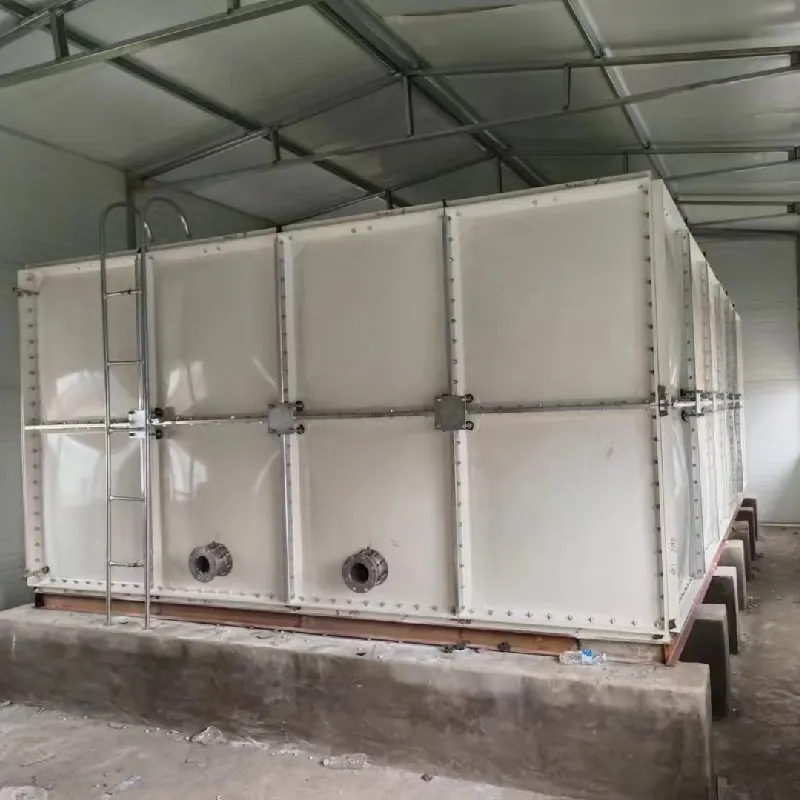
Technical Specifications and Parameters
The performance and reliability of a smc panel tank are defined by its technical specifications and the advanced properties of the SMC material. Understanding these parameters is crucial for engineers and procurement specialists when selecting the appropriate storage solution.
Key Material Properties of SMC FRP:
- Tensile Strength: Measures the material's resistance to breaking under tension. Typically ranges from 60-120 MPa (ASTM D638).
- Flexural Strength: Indicates resistance to deformation under bending load, often 120-200 MPa (ASTM D790). This is critical for tank panels subjected to water pressure.
- Heat Deflection Temperature (HDT): The temperature at which a polymer sample deforms under a specified load, usually 150-200°C (ASTM D648), demonstrating thermal stability.
- Water Absorption: A very low percentage (
- Specific Gravity: Typically 1.8-2.0, making it lighter than steel or concrete but structurally robust.
- UV Resistance: Enhanced with additives for outdoor installations to prevent degradation from sunlight.
Typical Product Specification Table (Illustrative for a Sanitary SMC FRP Tank):
| Parameter | Specification | Standard/Note |
|---|---|---|
| Panel Material | SMC (Sheet Molding Compound) FRP | Food Grade Compliant |
| Panel Thickness | 5mm - 20mm (varies with tank height/load) | Engineered for hydrostatic pressure |
| Standard Panel Size | 1m x 1m, 1m x 0.5m, 0.5m x 0.5m | Modular design for flexibility |
| Operating Temperature | -30°C to +80°C | Suitable for diverse climates |
| Water Absorption | ≤ 0.1% (24 hours) | ASTM D570 |
| Service Life | 20-30+ years | Under proper maintenance |
| Sealant Material | Non-toxic EPDM Rubber | Food-grade, UV resistant |
| Internal Bracing | FRP or Stainless Steel (SUS304/316) | Ensures structural integrity |
| External Fasteners | Hot-dip Galvanized or Stainless Steel | Corrosion protection |
Technical Advantages of SMC Panel Tanks
The adoption of smc panel tank technology is driven by a host of technical advantages that address critical challenges in water storage, particularly for industrial and commercial applications requiring high standards of hygiene and durability.
- Superior Corrosion Resistance: Unlike metallic tanks, SMC FRP panels are inherently resistant to rust, chemical corrosion, and electrochemical degradation. This is crucial for applications involving various water qualities, from potable water to industrial effluents, guaranteeing a longer service life and preventing contamination.
- Exceptional Hygiene: The smooth, non-porous internal surface of SMC panels actively inhibits bacterial growth, algae formation, and biofilm accumulation. This feature, combined with compliance to standards like NSF/ANSI 61, makes them ideal for storing potable water, ensuring public health safety.
- Modular Design & Flexibility: Being sectional tanks, they offer unparalleled flexibility in capacity (from 1 m³ to over 20,000 m³) and dimensions. This allows for bespoke tank configurations to fit specific footprints and height restrictions, optimizing site utilization and simplifying logistics.
- Lightweight yet Robust: SMC panels possess a high strength-to-weight ratio. This reduces the structural load on foundations, simplifies transportation, and accelerates installation times, contributing to a lower overall smc panel tank price for installation.
- Leak-Proof Construction: Precision-molded panels, coupled with high-grade, food-safe EPDM rubber gaskets and stainless steel fasteners, create a highly reliable, leak-proof structure, minimizing water loss and potential property damage.
- Excellent Thermal Insulation: The low thermal conductivity of FRP materials helps maintain stable water temperatures inside the tank, reducing the need for active heating or cooling, thus offering significant energy saving benefits in certain climates.
- UV Resistance & Weatherability: Formulations often include UV stabilizers, allowing the tanks to withstand prolonged exposure to sunlight without degradation, making them suitable for outdoor installations in diverse climatic conditions.
- Low Maintenance: The durable, non-corrosive, and hygienic nature of SMC tanks significantly reduces maintenance requirements and associated operational costs over their extended service life.
Application Scenarios
The versatility and robust performance characteristics of smc panel tank systems make them indispensable across a wide array of industries and applications globally. Their adaptability to various environmental conditions and content types (primarily water) is a key differentiator.
- Municipal Water Supply & Drainage: Essential for public waterworks, booster stations, and rural water storage, ensuring a stable and sanitary supply of potable water to communities. Their modularity allows for rapid deployment in developing areas.
- Industrial Processing: Used for storing process water, cooling water, and treated wastewater in manufacturing plants, power generation facilities, and mining operations. The corrosion resistance is particularly beneficial in these demanding environments.
- Fire Suppression Systems: Crucial for maintaining a reliable reserve of water for fire sprinkler and hydrant systems in commercial buildings, factories, and warehouses, meeting stringent safety codes.
- Agriculture & Irrigation: Provides efficient storage for irrigation water, livestock watering, and rainwater harvesting, supporting sustainable agricultural practices.
- Commercial & Residential Buildings: Installed in high-rise buildings, hotels, hospitals, and educational institutions for domestic water supply, overflow tanks, and emergency reserves.
- Food & Beverage Industry: For storing ingredients like potable water used in production, or for washdown processes, where maintaining extreme hygiene standards is paramount. The non-toxic, food-grade materials are vital here.
- Chemical Storage (Specific Types): While primarily for water, certain SMC formulations can be adapted for storing mild chemicals, provided specific chemical resistance data is consulted.
In a typical urban development project, an smc panel tank might be deployed on a rooftop to supply water under gravity, reducing pumping costs, or underground for space optimization. In a remote industrial facility, its ease of assembly mitigates logistical challenges, bringing reliable water storage where it's most needed.
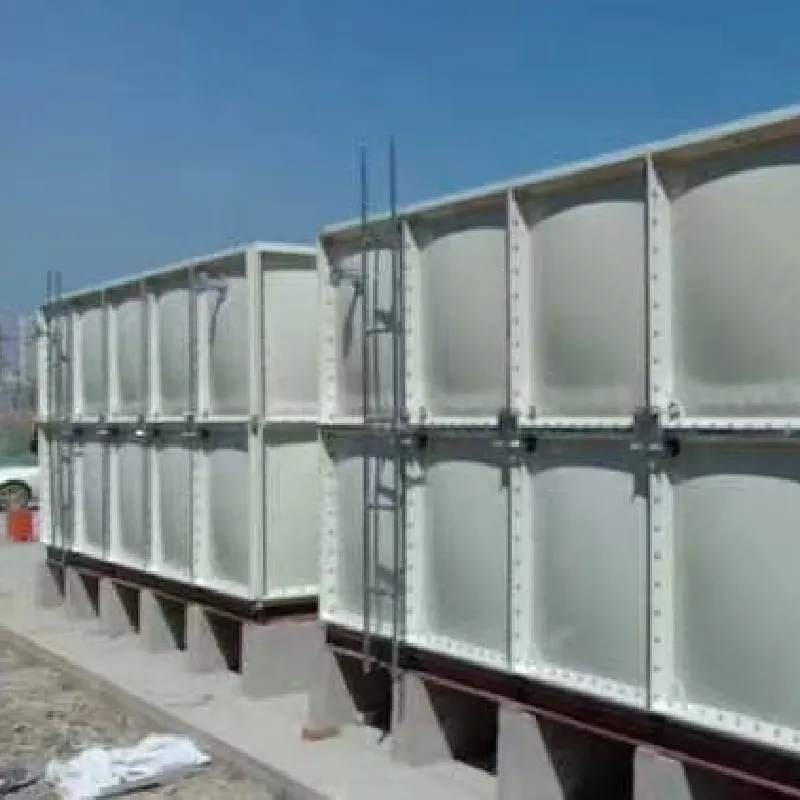
Customized Solutions
One of the primary strengths of smc panel tank systems is their inherent adaptability. The modular nature allows for extensive customization, ensuring that each tank solution precisely meets the unique requirements of a project, encompassing everything from capacity and dimensions to specialized accessories and material enhancements.
- Capacity & Dimensions: Tanks can be designed for capacities ranging from a few cubic meters to tens of thousands. The modular panels (e.g., 1m x 1m, 1m x 0.5m) allow for flexible length, width, and height configurations, fitting into irregular spaces or optimizing available footprints.
- Panel Thickness & Reinforcement: Panel thickness is engineered based on the tank's height and internal hydrostatic pressure, ensuring structural integrity. For larger tanks, internal or external steel reinforcement systems are custom-designed and included.
- Accessory Integration: Customization extends to the integration of various accessories, including:
- Manholes and inspection hatches for easy access and maintenance.
- Inlet/outlet nozzles, overflow pipes, drain valves, and vent pipes, all positioned according to client specifications.
- External ladders, internal ladders, and platforms for safe access.
- Level indicators, pressure gauges, and remote monitoring sensors (e.g., IoT-enabled solutions).
- Heating elements or insulation jackets for temperature control in specific applications.
- Special Material Formulations: While standard SMC is robust, specific applications might require enhanced properties. This includes formulations with higher UV stabilizers for extreme solar exposure, anti-algae additives, or even specialized resins for very mild chemical resistance (after thorough consultation and testing).
- Foundation & Base Design: While tanks are typically installed on concrete pads, customized pedestal or structural steel support frames can be designed for elevated installations, or for existing uneven surfaces.
This bespoke approach ensures maximum efficiency and cost-effectiveness, aligning the sectional tanks perfectly with operational demands and environmental constraints.
Vendor Comparison and Selection Criteria
Choosing the right supplier for a smc panel tank is as critical as selecting the tank technology itself. A thorough vendor comparison should consider several key factors beyond just the initial smc panel tank price, focusing on long-term value, reliability, and support.
Key Vendor Comparison Points:
| Criteria | Description | Importance |
|---|---|---|
| Material Quality & Certification | Does the vendor use food-grade SMC compliant with NSF/ANSI 61, WRAS, or equivalent local standards? Are ISO 9001 and ISO 14001 certifications present? | Critical for public health, regulatory compliance, and product longevity. |
| Manufacturing Expertise | Years of experience in SMC molding, consistency in panel production, advanced machinery (e.g., CNC for precision). | Ensures panel accuracy, structural integrity, and reduced assembly issues. |
| Customization Capability | Ability to tailor tank dimensions, nozzle positions, and accessories to specific project requirements. | Optimizes space utilization and operational efficiency. |
| Engineering Support & Design | Availability of technical teams for design consultation, structural calculations, and installation guidance. | Crucial for complex projects and ensuring optimal tank performance. |
| Warranty & After-Sales Service | Comprehensive warranty on materials and workmanship. Prompt customer support, spare parts availability. | Protects investment and ensures continuous operation. |
| Logistics & Lead Time | Reliable delivery schedules and efficient logistics for global distribution. | Impacts project timelines and overall cost. |
| Reputation & Case Studies | Portfolio of successful projects, client testimonials, and long-standing industry presence. | Indicates reliability and proven performance. |
Application Case Studies & Customer Experience
The practical benefits of smc panel tank systems are best illustrated through real-world applications and the direct feedback from end-users. These case studies highlight the versatility, durability, and cost-effectiveness of these advanced water storage solutions.
Case Study 1: Municipal Water Supply in a Developing Region
Challenge: A rapidly expanding municipality faced issues with an aging concrete water reservoir that was susceptible to leakage and contamination, leading to inconsistent potable water supply. The site also had challenging terrain, making heavy construction difficult.
Solution: A 5,000 m³ smc panel tank was chosen due to its modularity and ease of installation. Individual panels were transported to the remote site and assembled on a pre-prepared foundation. The food-grade SMC material ensured the long-term purity of the water.
Outcome: The tank was commissioned in 30% less time than a conventional build. The leak-proof design and hygienic properties significantly improved water quality and reliability for the local population. The lightweight panels also reduced the need for heavy machinery, minimizing environmental impact during construction.
Case Study 2: Industrial Process Water for a Pharmaceutical Plant
Challenge: A pharmaceutical manufacturing facility required a new 2,000 m³ tank for storing demineralized process water. The critical requirement was absolute purity, no leaching, and resistance to intermittent high temperatures from the process. Space was also a constraint within the existing facility footprint.
Solution: A specialized SMC panel tank with enhanced resin formulation for higher temperature resistance and FDA-compliant materials was installed. Its sectional tanks design allowed for construction in a tight area.
Outcome: The tank perfectly integrated into the plant's operations. Routine water quality tests consistently confirmed zero contamination from the tank material. The client noted a significant reduction in maintenance costs compared to their older, steel-lined tanks, leading to a strong return on investment for the smc panel tank price.
Case Study 3: Rooftop Fire Reserve for a Commercial High-Rise
Challenge: A new high-rise commercial complex needed a reliable 1,000 m³ fire suppression water tank on its rooftop. Weight constraints on the building's structure were a major concern.
Solution: A lightweight SMC panel tank was specified. The modular panels were hoisted individually to the rooftop and assembled on site, eliminating the need for complex and costly heavy lifting of a pre-fabricated tank.
Outcome: The tank met all fire safety regulations and structural load requirements. The installation was completed efficiently, minimizing disruption to other construction activities. The building management appreciated the minimal long-term maintenance required for the corrosion-resistant FRP panels.
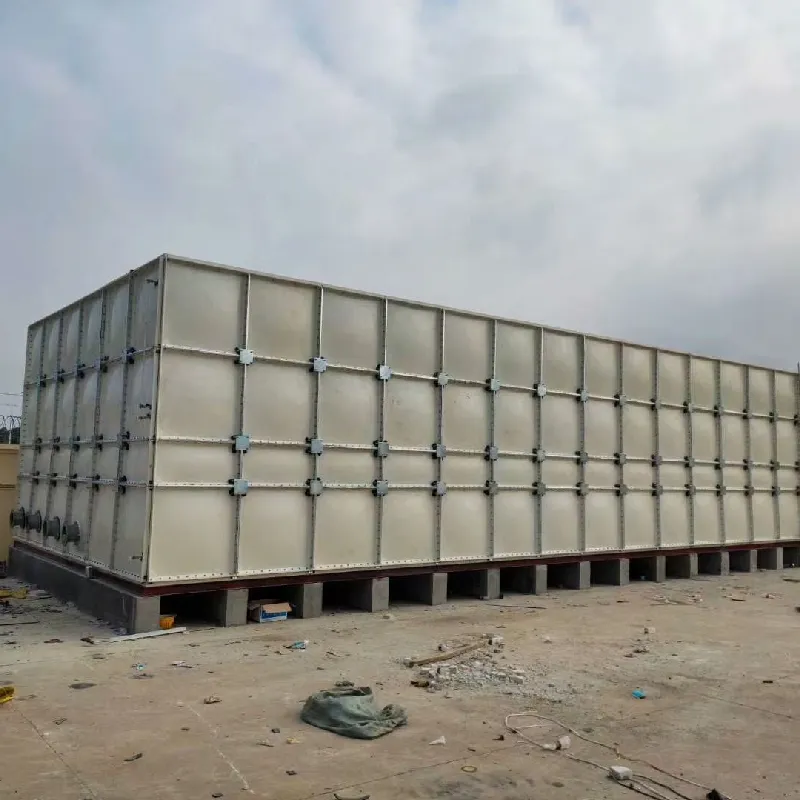
Authoritativeness & Trustworthiness
Establishing trust and authority in the B2B sector for advanced storage solutions like sectional tanks is paramount. Our commitment to excellence is underpinned by stringent adherence to international standards, robust quality management, and a strong track record of client satisfaction.
- Certifications: Our products are manufactured under ISO 9001 (Quality Management System) and ISO 14001 (Environmental Management System) certified processes, ensuring consistent quality and environmental responsibility. Panels often hold additional specific certifications such as NSF/ANSI 61 (Potable Water Components – Health Effects) and WRAS (Water Regulations Advisory Scheme) for potable water safety.
- Industry Experience: With over [X, e.g., 15] years of dedicated experience in advanced composite manufacturing, we have delivered thousands of reliable water storage solutions across diverse global markets.
- Partner Clients: We proudly serve a broad portfolio of clients including municipal water authorities, large-scale industrial enterprises (e.g., petrochemical, mining, food & beverage), commercial developers, and international EPC (Engineering, Procurement, and Construction) firms.
- Testing & Data: All smc panel tank products undergo rigorous internal and third-party testing to validate material properties, structural integrity, and hygienic performance, with detailed test reports available upon request. Our data consistently demonstrates compliance with or exceeding industry benchmarks for strength, durability, and non-leaching properties.
Lead Time & Fulfillment
Efficient project execution relies on clear communication and reliable lead times. For smc panel tank projects, our fulfillment process is designed to be transparent and streamlined.
- Design & Quotation: Typically 3-7 business days, depending on complexity and customization requirements.
- Manufacturing Lead Time: Standard panels usually require 15-30 business days for production, depending on tank size and current order queue. Highly customized tanks or very large projects may require 30-45+ business days.
- Logistics & Shipping: Shipping times vary significantly based on destination. We work with reputable global logistics partners to ensure timely and secure delivery. Comprehensive packaging ensures panels arrive in pristine condition.
- Project Management: A dedicated project manager is assigned to each order to provide real-time updates, manage documentation, and coordinate logistics from order placement to delivery.
Warranty & Customer Support
Our commitment to quality extends beyond delivery, with comprehensive warranty programs and dedicated after-sales support to ensure lasting satisfaction and optimal performance of your smc panel tank.
- Warranty Commitments: We provide a standard 10-year warranty on our SMC panels, covering manufacturing defects and material integrity. Specific warranty terms for accessories (e.g., internal bracing, fasteners) vary by component.
- Technical Support: Our team of experienced engineers is available for technical consultations, installation guidance, and troubleshooting support throughout the project lifecycle and beyond.
- Spare Parts & Maintenance: We ensure the availability of spare parts for all our tank components. Detailed maintenance manuals and training can be provided to client teams for optimal tank longevity.
- Global Network: With a growing network of service partners and representatives, we strive to provide timely support and service, regardless of your geographical location.
Frequently Asked Questions (FAQ)
- Q1: What is the typical lifespan of an smc panel tank?
- A1: With proper installation and maintenance, SMC panel tanks are designed to have a service life of 20-30 years or even longer, significantly outperforming many traditional tank materials.
- Q2: Are SMC tanks suitable for potable water storage?
- A2: Yes, absolutely. Our SMC panels are manufactured from food-grade resins and comply with international standards such as NSF/ANSI 61 and WRAS, ensuring the safe and hygienic storage of potable water.
- Q3: How does the smc panel tank price compare to steel or concrete tanks?
- A3: While the initial material cost for SMC can sometimes be higher than basic steel, the overall installed cost often becomes competitive or even lower due to faster installation, reduced foundation requirements, lower maintenance, and a significantly longer lifespan. Considering total cost of ownership (TCO), SMC tanks offer excellent value.
- Q4: Can these sectional tanks be installed outdoors?
- A4: Yes, SMC tanks are highly resistant to UV radiation and weathering. Special UV-resistant gel coats or additives can be incorporated into the panels to ensure long-term durability in outdoor environments.
- Q5: What kind of foundation is required for an SMC panel tank?
- A5: A flat, level concrete foundation is generally recommended to support the weight of the tank and its contents uniformly. Detailed foundation requirements will be provided based on tank size and site-specific conditions.
Conclusion
The smc panel tank represents a pinnacle in modern water storage technology, offering an unparalleled blend of durability, hygiene, flexibility, and cost-effectiveness. Its robust manufacturing process, adherence to rigorous technical standards, and wide range of applications make it an optimal choice for B2B decision-makers seeking reliable and sustainable water infrastructure solutions. By choosing high-quality SMC sectional tanks, businesses and municipalities can ensure long-term, contaminant-free water storage while optimizing operational efficiency and minimizing environmental impact.
References
- ISO. (n.d.). ISO 9001 - Quality management. Retrieved from www.iso.org
- NSF International. (n.d.). NSF/ANSI 61: Drinking Water System Components – Health Effects. Retrieved from www.nsf.org
- Water Regulations Advisory Scheme (WRAS). (n.d.). Water fittings and materials directory. Retrieved from www.wras.co.uk
- ASTM International. (n.d.). Standard Test Methods for Plastics (various D series standards). Retrieved from www.astm.org
- Composites World. (n.d.). SMC (Sheet Molding Compound) process and materials. Retrieved from www.compositesworld.com
-
High Quality Fiberglass Rods for Electric Fence Insulation GuideNewsApr.16,2026
-
Benefits and Guide of Installing a White Fiberglass FenceNewsApr.09,2026
-
Choosing the Right Fibreglass Fence for Property Enhancement and LongevityNewsApr.07,2026
-
Comprehensive Guide to Durable Fiberglass Fence Rods and Their ApplicationsNewsMar.31,2026
-
Comprehensive Guide to Durable Fiberglass Fence Post Solutions for Various ApplicationsNewsMar.28,2026
-
Comprehensive Guide to Fiberglass Fencing Benefits and ApplicationsNewsMar.26,2026
-
Comprehensive Guide to Choosing the Right Safety Guard System for Industrial ProtectionNewsMar.24,2026